
By James Ren
Originally published March 20, 2021
It’s been a few years since my last misadventure with buying a luxury watch drove me to collecting vintage watches. I still enjoy collecting vintage but the spotty water resistance and my irrational need to wash everything in the sink when I get home from the hospital means that I rarely wear them now. I’ve been wearing a Hamilton at work and experimented with a Boldr mecha-quartz chronograph with a medical theme. At this point I’ve large gone back to the Hamilton for the satisfaction of a purely mechanical watch. I decided that I needed an upgrade for my birthday this year which is also about a year since the pandemic started. I wanted something I could wear every day so I decided on a modern watch.
My (Many) Issues with Modern Watches
I don’t particularly care for “modern sizes.” A watch today is generally wider and thicker than its vintage predecessor. The width spreads out the dial and often looks unbalanced to me. The thickness means that it sits tall on the wrist, turning it into a door knob magnet.
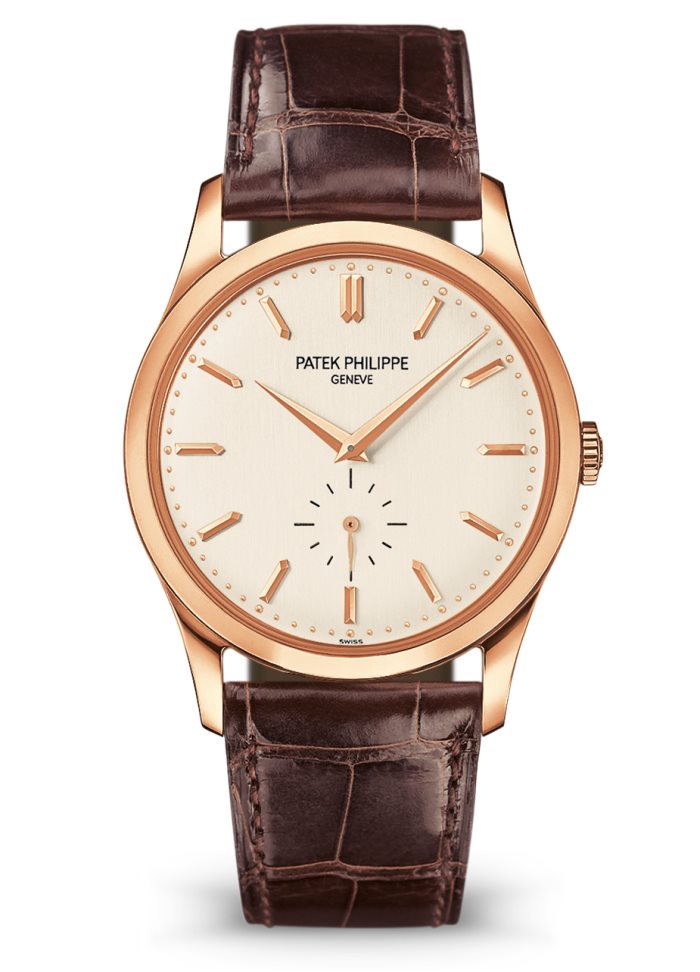

Additionally, modern watches are expensive. Although the vintage market has gone up a lot, a very nice watch can be found for somewhere around $1,500-$3,000. The more different it is from a Rolex sports model the more likely you are to find a deal. You will typically pay more to find a modern watch with similar quality.
A third problem is that I generally find pre-quartz crisis designs more appealing. Nowadays computer-aided design and market research means that a new watch can be endlessly tweaked and adjusted to meet consumer trends. I find the older designs, which were more often the work of a single designer on paper, to be more aesthetically pleasing. In particular, the cases of older sports watches were sometimes as thick or large as modern watches but somehow feel better on the wrist. The modern ones often seem to be missing a human touch.
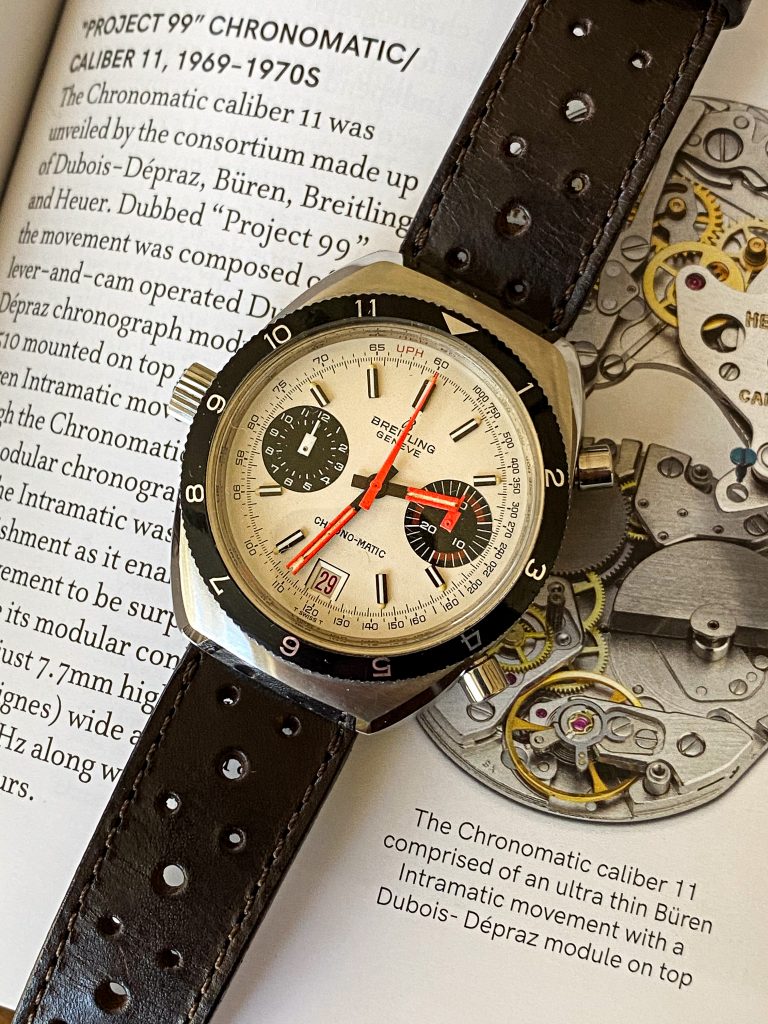
A related issue is the old adage “old watch movements were designed by watchmakers and new watch movements are designed by engineers.” Older movements were designed on paper by humans using an element of artistry and beauty. Oftentimes each company had its own lineage of watch movements with a distinctive look. The consolidation of the Swiss watch industry in response to the quartz crisis led to the destruction of many of those old lineages in favor of efficiency and mass production. The loss of the Longines 30CH chronograph movement with its heritage extending back to the 13ZN was particularly egregious.

Another issue is that the finishing of a watch movement had a functional as well as artistic purpose. Careful hand finishing trapped dust away from the moving parts and kept lubricants in place. The accuracy of a watch was directly related to how it was finished. Machined parts are now good enough that hand finishing is in many ways superfluous to the function of the watch. Older watch movements from moderately priced brands had some level of hand finishing which is absent today due to less costly alternatives.
Computer-aided design also allows for the cutting of corners. In the name of streamlining the manufacturing process and improving efficiency, a part can be made more roughly, or the case can be made thicker to accommodate a thicker movement which is easier to assemble. While the final product may be more reliable, it lacks artistry. Brands that maintain that artistry today are often exorbitantly expensive.

Choosing a Brand
I started my thought process by considering what brand I wanted to buy. I first started with a budget. I work hard for my money and I don’t easily part with it. I decided that I wouldn’t consider any watch over $10,000. This effectively excluded many excellent brands that I would otherwise consider such as F.P. Journe and H. Moser. I also wanted to build in flexibility. The more I spend, the more painful it is, so if I could spend less than $10,000 that would be better. As I surveyed the modern watch landscape, I noticed a lot of what I call “Al Bundy” brands. Like the television character who is always celebrating his four touchdowns in one football game in high school while ignoring his current problems, these brands had a glorious past but their present version leaves something to be desired. I decided to focus on brands that I consider to be at their peak now. I ended up considering Lange, Grand Seiko, and Tudor.

Buying on a Budget-Gray Market and Pre-owned Lange
Although it costs more than I wanted to spend, I’ve been quietly contemplating a Lange for a while. I like the brand’s stubborn focus on excellence and functionality. In fact, the first luxury watch that really made an impression on me was a Lange Annual Calendar that I saw at Wempe NYC. Working backwards from my budget, the least expensive Lange is a Saxonia thin. The retail for a manual wind watch in gold with no seconds hand is $15,900. I’m not sure if having a “9” in the price instead of being $16,000 makes it seem less expensive but there it is.
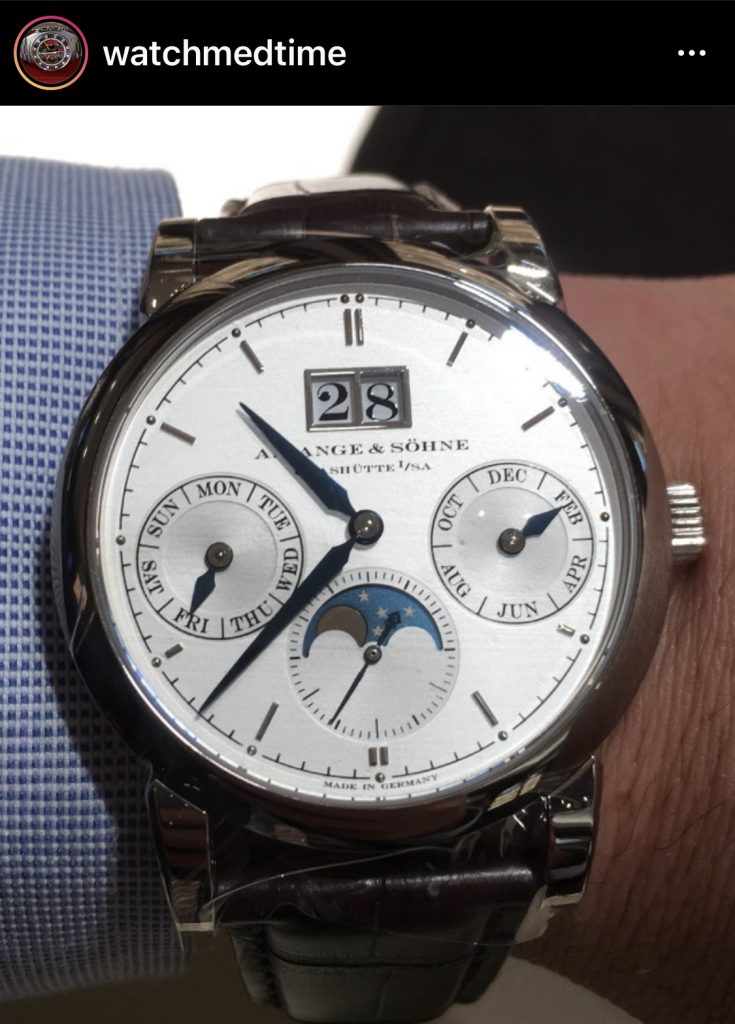
When I want to punch above my weight in terms of budget, I check the preowned market for the best deals. Reputable dealers charge more than private sellers because buying from them is less risky. They add value by authenticating the watch, cleaning and inspection or servicing it prior to sale, and most of all, by offering a return policy.
Still, if you are an experienced shopper with a good watchmaker, finding a private sale can save a good bit of money.
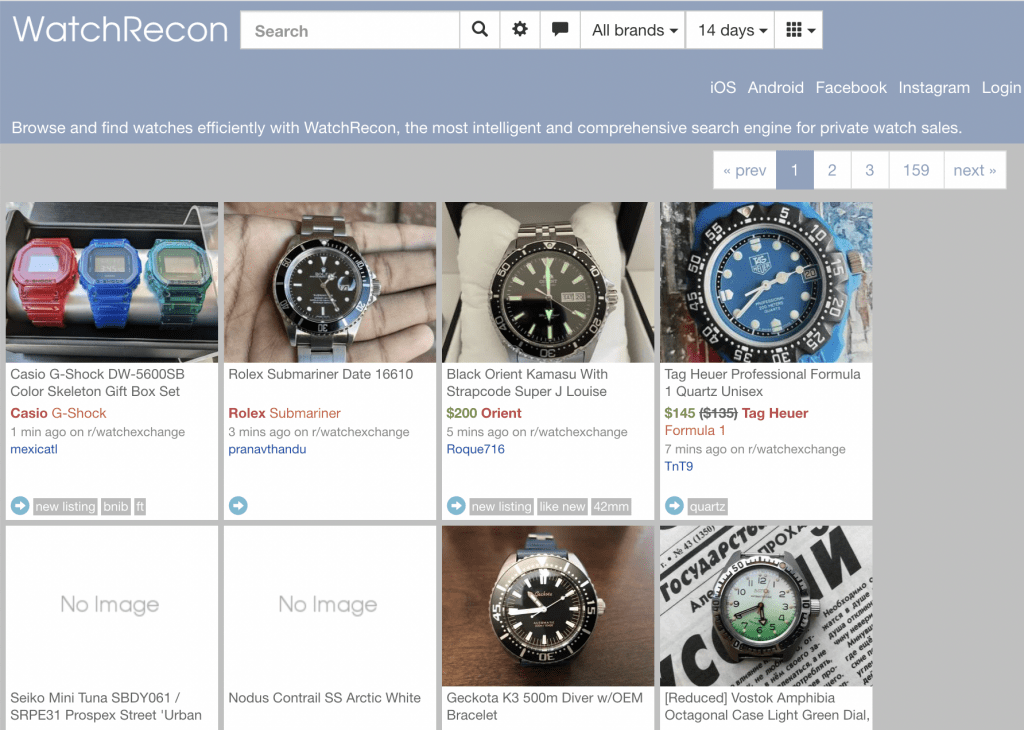
Gray market sellers charge a premium over pre-owned dealers because their watches are unworn. They generally acquire their stock from excess inventory from authorized dealers and sell at a discount. The manufacturer’s warranty is voided but it is rare for a decent watch to need a service within the warranty period. The bigger issue is that gray market dealers need to get watches that are unsold so they may not have popular models in stock. Some gray market dealers will still list the models on their website, sometimes at a premium, and then sell it without actually having the watch. Then they will try to source the watch so you may be waiting a long time before it arrives while they hold your money.
The gray market is best for finding watches at a discount that are produced in large quantities but are difficult for authorized dealers to sell. The gray market dealer is not beholden to any contract with the brands to maintain a certain price so they can sell those watches cheaply at the market rate.
A quick search on the preowned market revealed that a time only Lange can be had for around $13,000 which was still out of my price range.

Although Lange has the reputation of giving their least expensive watches as good of a finish as their most expensive, I felt hesitant about stretching my budget to buy something that was at the bottom of their catalog. I also felt that although their movement finishing is top notch, I wasn’t getting much in terms of watch functions for the money spent. To any sane person who isn’t obsessed with watches, it probably sounds ludicrous to spend $13,000 on a watch that doesn’t even have a seconds hand even if the watch was put together by Angela Merkel herself.

Enter Grand Seiko
Another brand which also has a stubborn focus on excellence but is available at a more accessible price point is Grand Seiko. This brand has really taken off after being separated from Seiko in 2017 and with the creation of a separate company to manage sales in the US in 2018. It certainly has enacted a stellar marketing plan to position itself as an accepted luxury brand in a very short time. However, behind the hype are excellent watches at a good price point.
Overall, my impression of the brand is that that the dial and hands are superb. The cases tend to be bulky and the bracelet tend to be too light and unevenly finished. I therefore gravitated towards the Elegance collection of dress watches which feature a number of slim watches on straps.

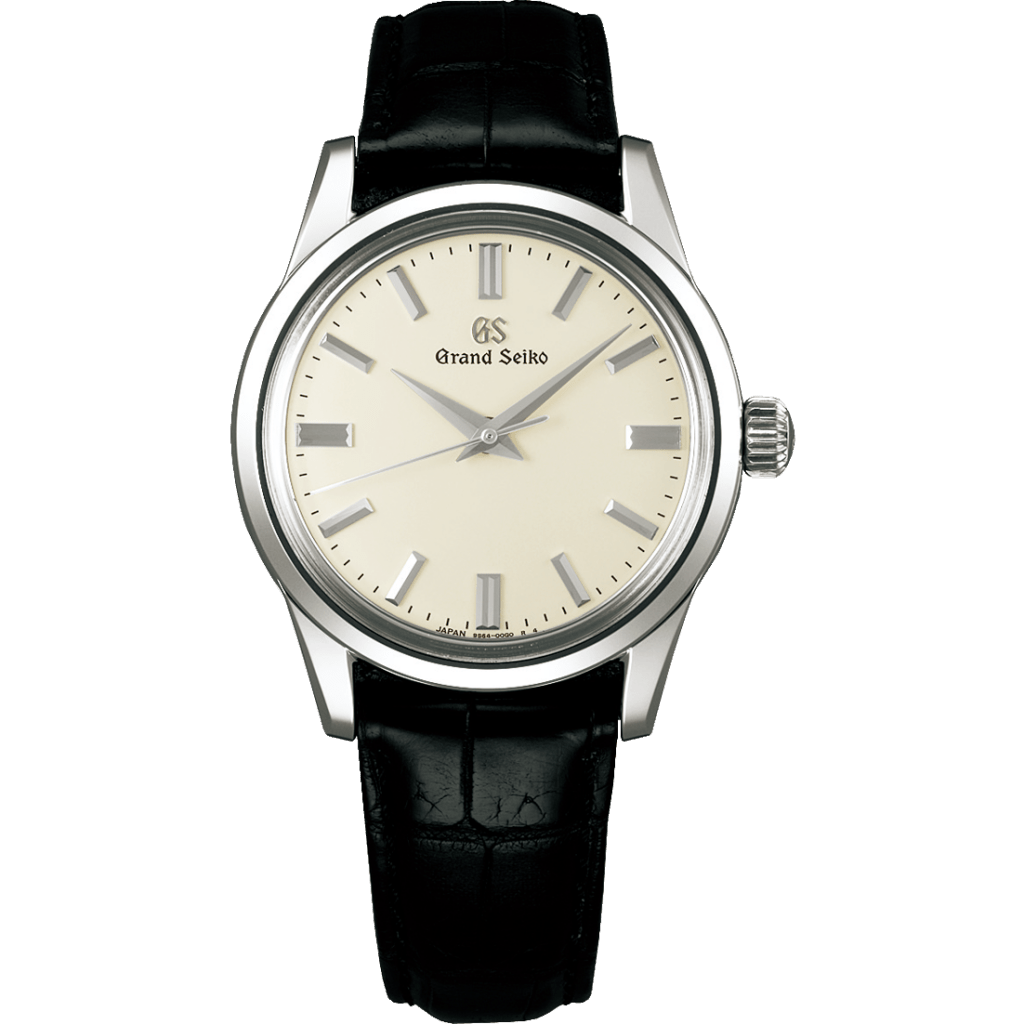
The SBGW231 is a manual wind 37.3 mm dress watch with a center seconds and stick markers for $4,300. I liked this model on the wrist because of the smaller size. It is slightly tall at 11.6 mm but not markedly so. I found the off-white dial color appealing. It gives off a vintage feeling without crossing over into obvious fauxtina. The hands and markers are well-finished. The case is the only slight disappointment. It would have benefited from some brushed surfaces and sharper transitions.
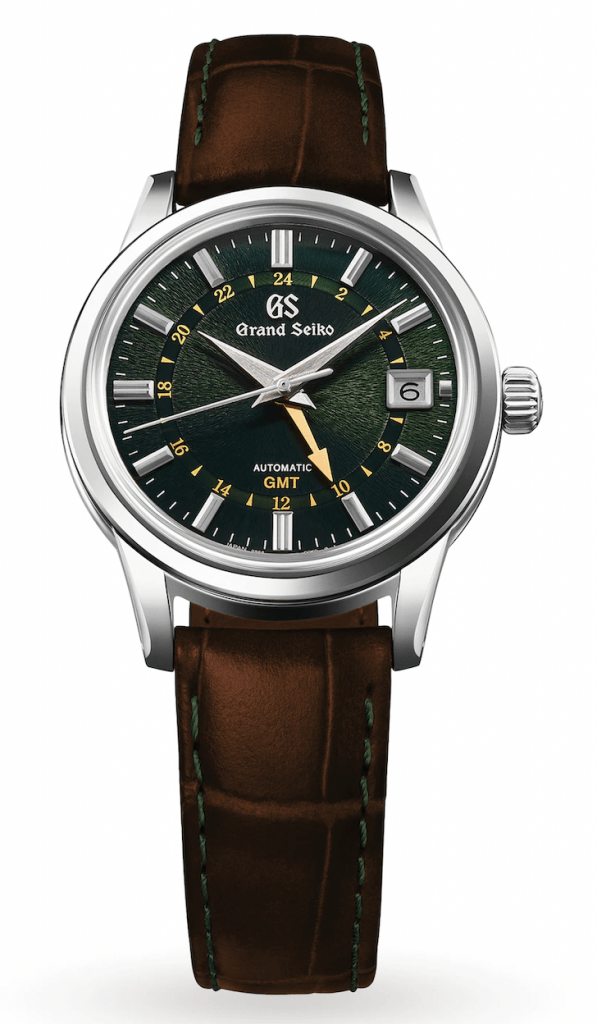
I also considered the SBGM241 for $5,200. This is the limited production GMT for Watches of Switzerland featuring a green dial with the Mount Iwate textured sunburst effect. The yellow accents on the dial along with the yellow GMT hand create a nice color palette. The color anticipated the SBGJ251 release this year which features a green dial GMT with texture on a bracelet instead of a strap. In addition to being a GMT, the watch is automatic and has a date. Ultimately at 39.5 mm wide and 13.7 mm thick it felt too tall on the wrist. The case is similar to the SBGW231 in that from the side view, the case is a bit fat with a tall crystal with relatively small lugs.
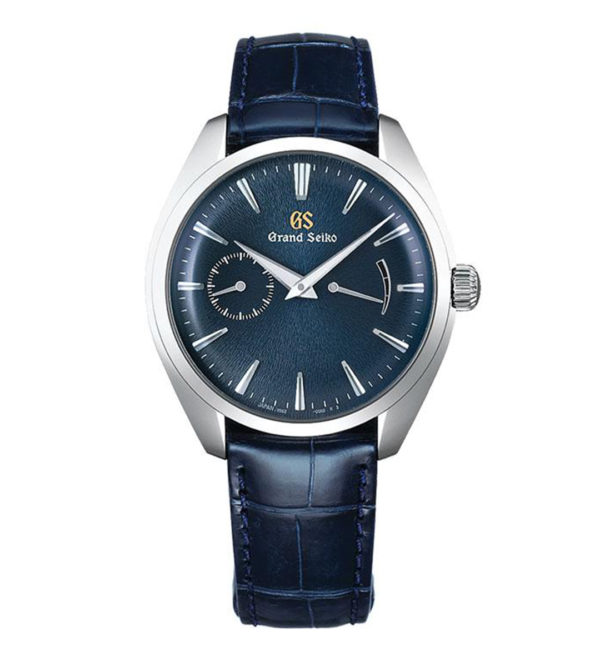
The SBGK007 was a strong contender at $6,900. The recently issued 9S63 movement creates a distinctive look with the running seconds at 9 and power reserve indicator at 3. I appreciate the effort and expense of creating a new movement which makes the watch more special in my eyes. The case also is better finished with brushed sides and no chamfers but a razor sharp transition between the edges. It measures 39 x 11.6 mm but it wears very slim with a pseudo-tonneau shape that hugs the wrist. This was the only Grand Seiko that I tried that I liked more from the side than from the front. Ultimately I found the dial a bit plain. The gray dial on a bracelet did not appeal to me in terms of color and I didn’t care for the bracelet.
I considered the limited edition blue Mount Iwate dial version but I was not able to find one.
One issue common to all these models is that they have poor water resistance. They are rated at 30 meters which translates to “splash-proof.” I already have a lot of vintage watches with poor water resistance so I wasn’t sure that adding another would be ideal in terms of diversifying my collection. I also was looking for an everyday wear piece and while these would be great in the office they are not really suitable for being in scrubs at the hospital.
Tudor
I then circled back to the Tudor Black Bay 36. I like the size, the simplicity, the lume, and bracelet. I very nearly bought this watch a few years ago but I ultimately went for the stylistically similar Rolex Explorer 114270.
At that time a BB36 was selling at retail for around $3200 when including tax and for another $1,000 you could get a 114270 so it didn’t make sense to get the BB36. Fortunately or unfortunately the Explorer has appreciated in value and is 20 years old this year so I don’t like wearing it as an everyday piece.

I considered getting the Black Bay 36 preowned for around $2,300 or gray market for around $2,500. One design feature which bugged me 2 years ago and still bugs me is that the crown tube is not only exposed but has a black color which draws attention to it. It looks unscrewed to me and I know myself well enough to know that a detail that bothers me so much in a store will bother me to the point of obsession once I own it. The other issue is that the markers look too large for the dial without a rotating bezel which adds another element of incompleteness to the overall design. I know that the ETA 2824 inside is just fine, but somehow it doesn’t feel very special. In my mind, modern Tudor signaled a break with the old Tudor of “cheaper Rolex with an outsourced movement” when they started production of their own movements. Having one of their ETA pieces would make me cringe slightly inside.

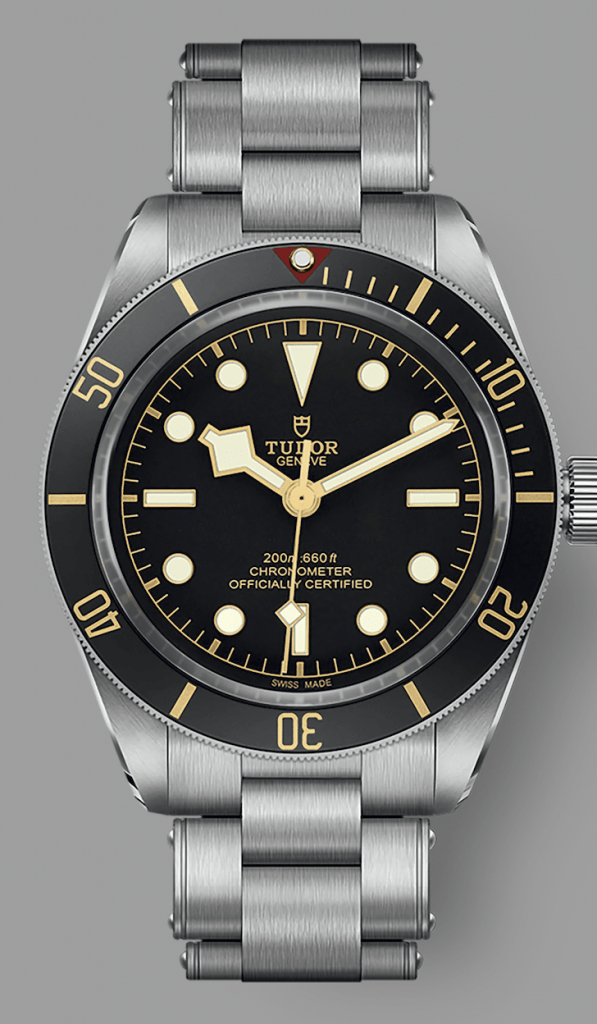
The Black Bay 58 is the smallest Black Bay other than the 36 and features an in-house movement. I had looked at the original version with the pseudo-gilt dial some time ago which did not particularly appeal to me. “Fauxtina” is a controversial topic but my take on it is that a new watch which is made to look aged will never look as good as a watch that has aged naturally. In that case, why bother? I also thought the watch looked a bit big on a bracelet.
My Experience of In-Person Shopping
Having been fully vaccinated some time ago and being in possession of a medical grade N95 mask, I feel comfortable venturing into areas that seemed off-limits last year. In fact, when walking in Manhattan I am more nervous of anti-Asian violence than I am of COVID-19 at this point. When I parked by car in a midtown parking garage the attendant looked at my mask nervously and said “should I be worried about the virus?” I sighed and told him that I am a doctor and was fully vaccinated some time ago.
I went into the Seiko boutique on Madison Avenue. I had been to the Grand Seiko “pop up” in Soho and to the nearby Watches of Switzerland to look at the SBGW231, SBGM 241, and the SBGK007 a few weeks before but I wanted to have a look at the SBGK005 with the blue Mount Iwate dial. I reminisced with the salesman about a shared pre-COVID-19 experience at the store when a strap maker visiting from out of town had stopped by wearing an Eichi II and given everyone in the store a fancy strap as a gift. Unfortunately the SBGK005 is not in stock at the Madison Avenue boutique either. Compared to the Soho pop up (which is becoming a permanent installation) the Madison Avenue location is smaller and less fancy but the selection is excellent and I am glad I got to visit both sites.

Slightly dejected, I continued to walk around Madison Avenue to check out the various watch stores. I went into the Madison Avenue Tourneau which is next to the Seiko boutique but didn’t find anything of interest. Their Rolex section was as barren of stainless steel sports models and Stella dial Oyster Perpetuals as you might expect.
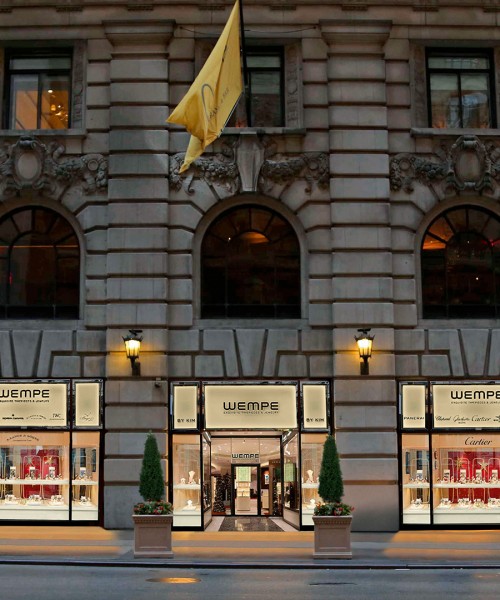
I had bought some very special earrings for my wife for her birthday at Wempe over the winter and went to stop by. My first, fairly awkward luxury watch browsing experience was at Wempe but I have a much higher comfort level now. Xina greeted me at the door. She had packed up the earrings when I picked them up a few months ago and I felt heartened and welcomed when she remembered me and asked how my wife was enjoying her earrings.
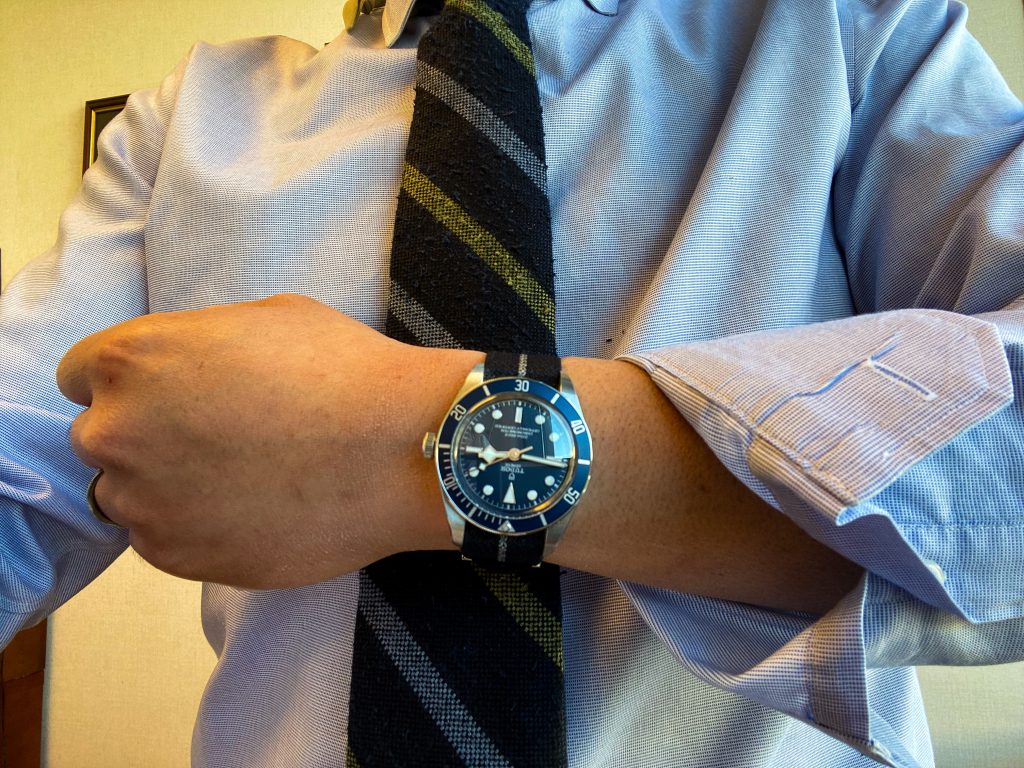
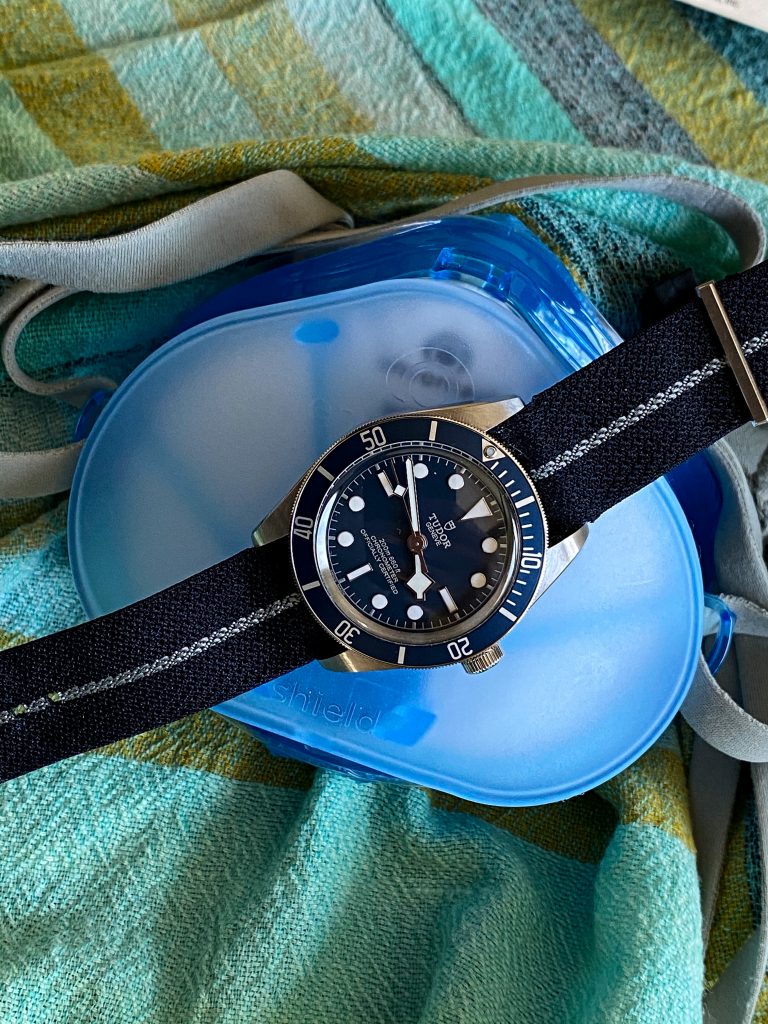
I had been in contact over e-mail with the store because I wanted to have a look at the Black Bay 58 Navy Blue and they happened to have one that they brought out for me. Since I didn’t find the prior 58 very appealing, I didn’t expect to want the blue version but when I put it on the wrist everything changed.
First, it was on the fabric strap which makes it wear smaller. The fabric strap also for some reason is rather short so it fits my wrist perfectly and it makes the downturned lugs hug the wrist. This wrist hugging effect is also what appealed to me about the SBGK007. The color of the dial and bezel matches very well with my work clothes since I typically wear a blue shirt and tie.
The quality is apparent throughout, from the polished chamfer on the case to the feeling of the screw-down crown and rotating clicks of the bezel, to the hand winding of the in-house movement. Somewhat surprised by how I felt, I checked it out in the mirror, texted some watch buddies, walked around the store a couple of times, and decided to pull out my credit card.
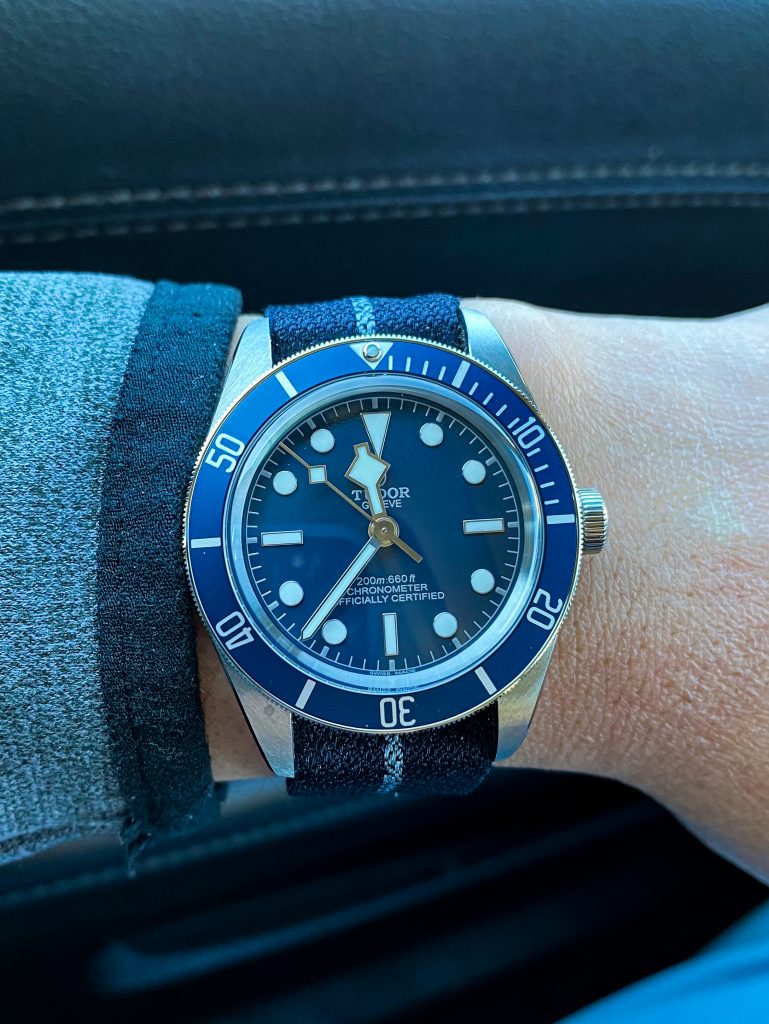
The BB58 Navy Blue is the perfect watch for me right now. The color matches my wardrobe. I can wear it with a shirt and tie in the office or with scrubs in the hospital. I toss it in the sink and wash it with soap and water as much as I’d like. It’s highly legible and the quality of construction is high enough so that I enjoy looking at it. Maybe when this country has herd immunity I’ll circle back to Grand Seiko but for now I’m good.
 The Lost Spring Bar