
The Skinny
- Diameter: 38.5 mm
- Thickness: 15.8
- Lug to lug: 42.3 mm
- Movement: Caliber 1040 (Modified Lemania 1340)
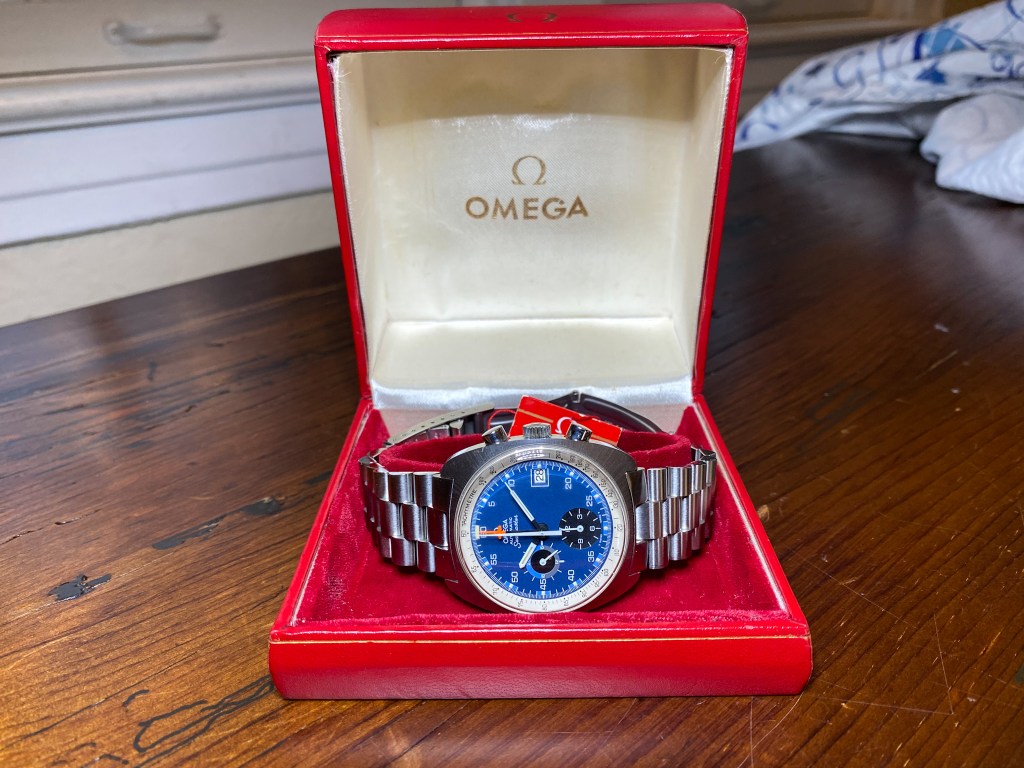
The First Omega Automatic Chronograph Movement
The author of Calibre 1040 referred to the 176.007 as the “poster child” of the 1040 family of chronographs because it is “the most common, most beloved, and most recognizable.” Now, why does the Omega caliber 1040 have an entire website devoted to it? First produced in 1970, it is the first automatically wound chronograph produced by Omega. It differs from the Lemania base caliber in the addition of a 24 hour hand with a day/night indicator in the running seconds subdial at 9 o’clock and in having the typical Omega copper finish instead of a simple nickel finish.
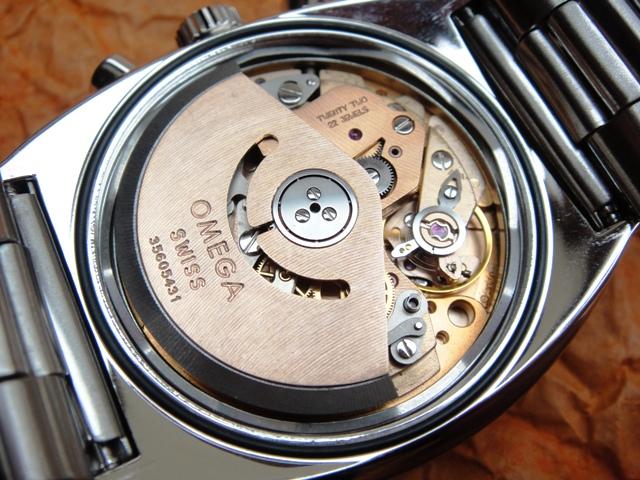
The 1040 had a number of unique features that distinguished it from the trio of automatic chronographs that came out the prior year with their varying claims of “first.” As they say, good things come to those who wait. A unique feature compared to its competitors is the central minute counter hand, which, when combined with the central seconds counter, is a more intuitive way of counting elapsed time. The other entirely unique feature is the Omega exclusive 24 hour hand with day/night indicator. The date at 3 and the 12 hour counter at 6 round out the quirky yet pleasingly asymmetric dial of the 1040 family. The challenges of incorporating these features into an automatic chronograph is perhaps better appreciated when noting that neither the Heuer/Breitling/Hamilton Chronomatic nor the Seiko 6139 was able to incorporate a running seconds hand. Unfortunately the 50th anniversary of the 1040 movement came and went in the lost year of 2020 without any celebration from the brand. Perhaps it is time to stop celebrating NASA’s achievements and start celebrating their own.
The later evolution of the movement might be considered a devolution in some ways. After five years the successor caliber 1045 (Lemania 5100 base) incorporated plastic parts to create a more robust but uglier movement. There was also a simplified movement called the Lemania 1341 that was used outside of Omega which lost not just the copper finish and the 24 hour hand but also 5 jewels. Based on serial numbers, it is estimated that about 82,200 caliber 1040 movements were produced.
The Case
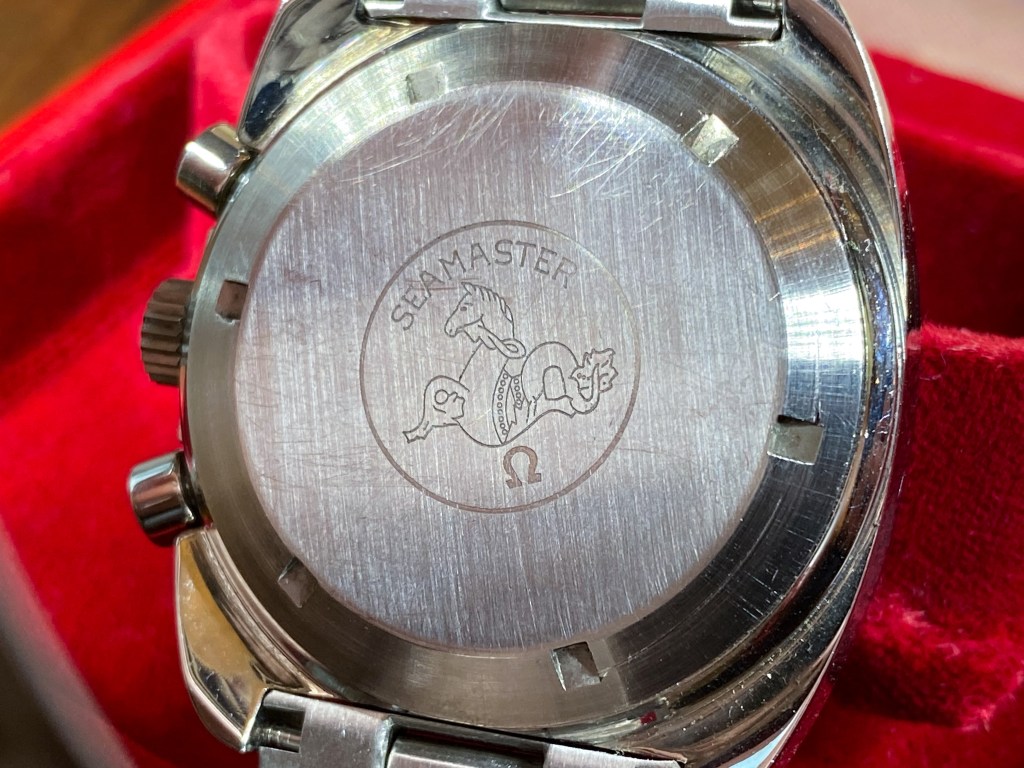
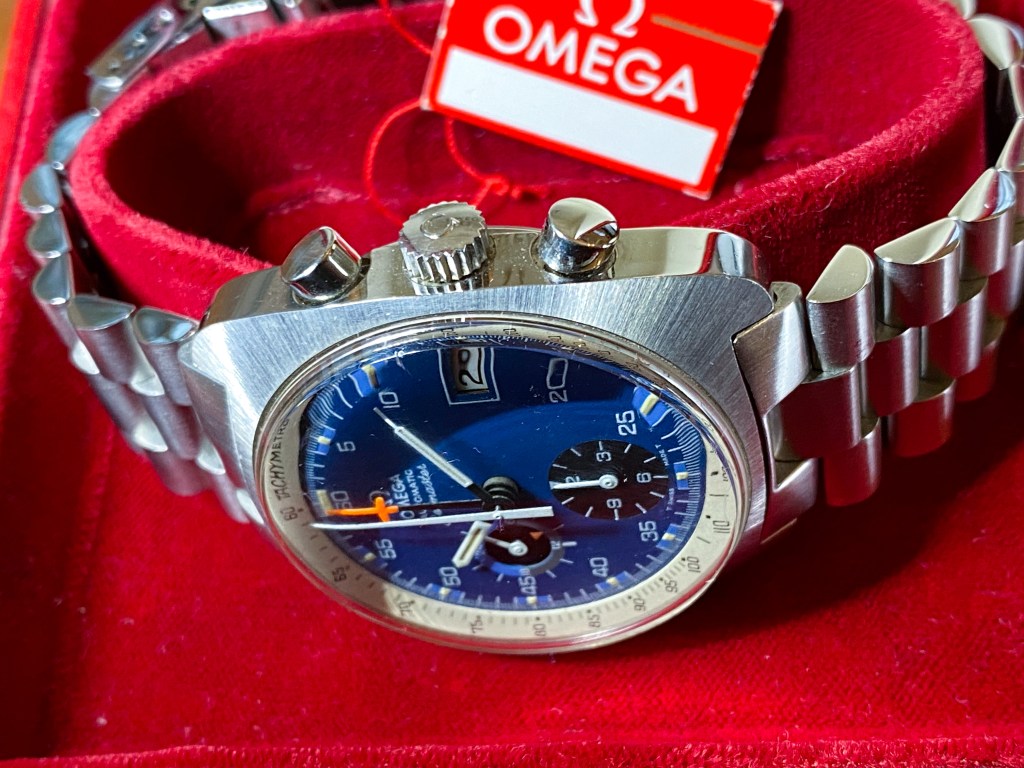
The dimensions seem slightly off by the numbers alone but don’t let that fool you. The vintage acrylic crystal is quite domed and the case is closer to 12 mm thick without it. The cushion case gives that curious combination of heft while fitting a skinny wrist due to the comparatively large surface area and short, 42 mm lug to lug distance. The anterior surface of the case has a typical 1970’s sunburst finish. There is no discernible bevel and the sides are polished. The caseback has a lightly engraved Seamaster text with a hippocampus and Omega symbol surrounded by a small circle, suggesting an early version.
I bought the watch head only and in the quirky world of vintage aftermarket bracelets I found, incredibly, that Uncle Seiko makes a bracelet specifically for this reference. The end links are solid and the bracelet has the feel of a vintage Omega bracelet except perhaps more solid and of course with no stretch. The clasp is friction fit and has a wide range of microadjustment that fit my 6.5 inch wrist. The end links were slightly tricky to insert and involved some wiggling with the spring bar tool but once the bracelet was secure it felt like it was meant to be.
The Dial
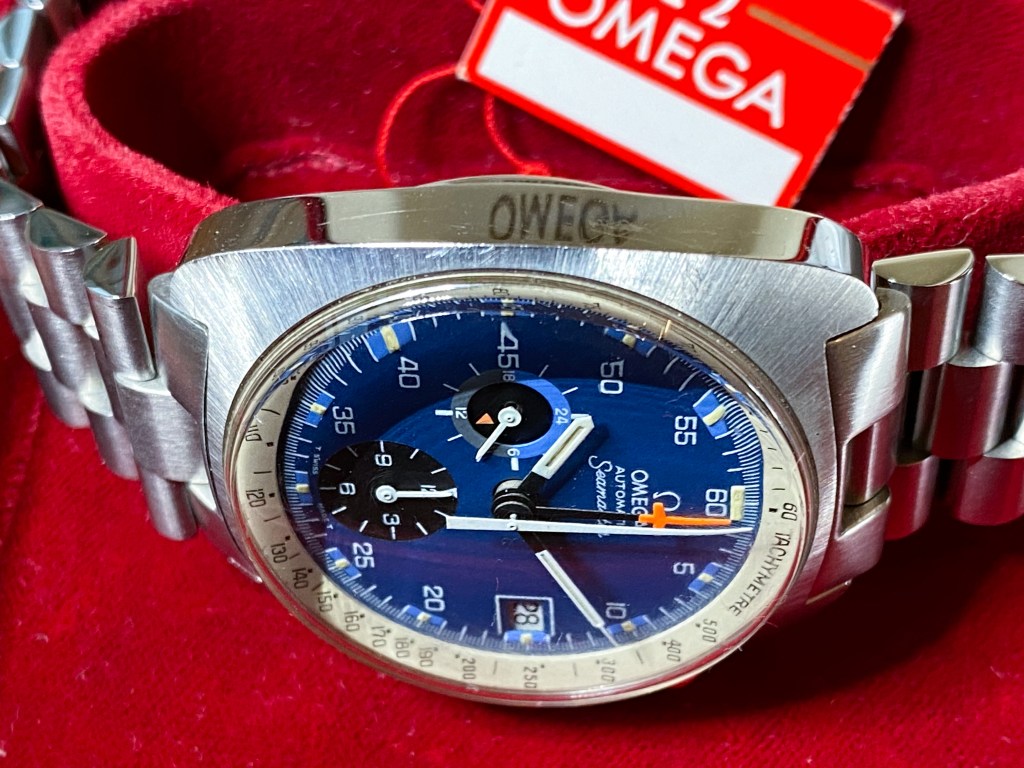
I will use the dial categories found at Calibre1040. Blue dials on this reference come in “A” and “B” variants which differ mostly by glossy versus matte and the type of hour marker. This is a B dial variant with a matte finish and “racing style” markers that span 2 seconds and consist of central lume with a light blue square on either side. It is also is an “OAS” dial in that the text at 12 reads “Omega Automatic Seamaster,” forming a pyramid shape compared to the “OSA.” There is an inner fixed white tachymeter bezel with black print which distinguishes the 176.007 from its more rare predecessor which lacks the tachymeter. The remainder of the dial has a very technical look due to the hours being marked with a number at every 5 minutes/seconds instead of 1 through 12. There is a date window at 3, an hour totalizer subdial at 6, and a running seconds with an orange arrow on an inner disc for the 24 hour indicator at 9. The 24 hour hand has a grey half circle marked 6, 12, 18 for daytime and blue half circle with 18, 24, 6 for daytime. The hands are mostly white, matching the date window, with the exception that the central minute counter is black with an orange “airplane” shaped orange tip, and the hour and minute hands are black towards the center with white distally surrounding luminous material. The minute hand has a syringe tip, further emphasizing the technical nature of the dial.

Summary
The combination of the chunky, rounded cushion case with the bold color scheme and highly technical dial gives the 176.007 a striking presence on the wrist. The central minute counter is historically unusual, being found in such rare birds as the Longines Doppia Lancetta and the Mido Multicenter-chrono. Later popularized for a time by the later Lemania 5100, an automatic chronograph with a central minute counter has only recently reappeared on the market with the Moser Streamliner Flyback which is aimed at more rarified air. For someone who loves that watch but perhaps not the price point, the 176.007 remains a historically significant watch with an excellent movement and unique design that remains relatively affordable.
 The Lost Spring Bar