
What is Gyachung?
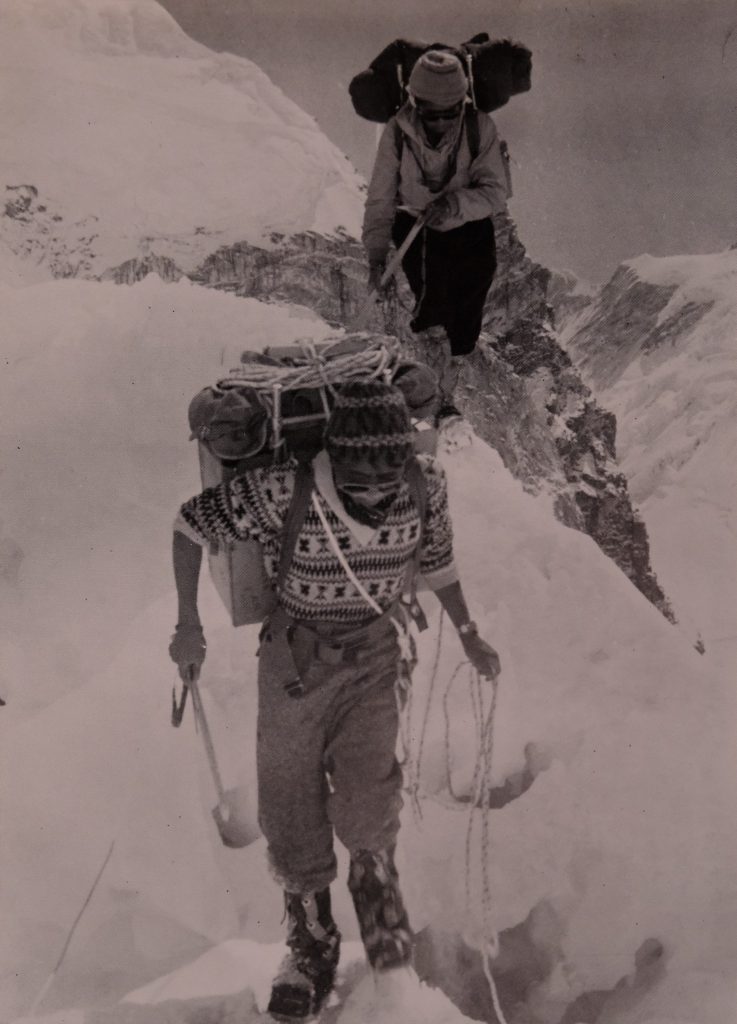
This book tells the formerly lost story of a Japanese mountaineering association’s 1964 summiting of Gyachung Kang, a 7,952 meter Himalayan mountain. It is a neighbor of Mount Everest which by comparison measures at 8,848 meters. The expedition was exceedingly dangerous due to challenging conditions. These included steep glacial ice surfaces and the Great Ice Couloir, an almost impassably steep frozen mountain gully that needed to be crossed to reach the summit.
So, watches?
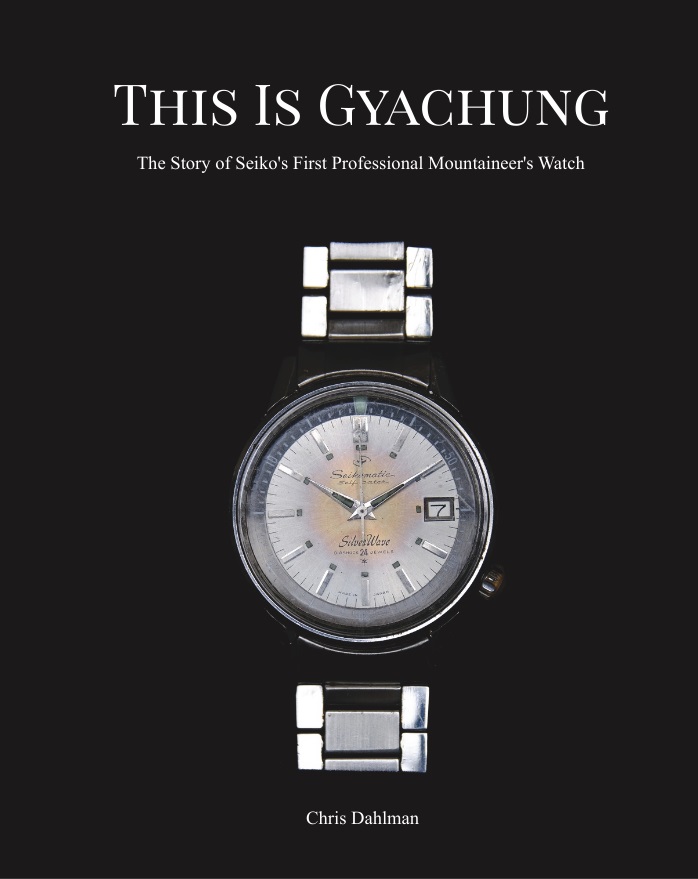
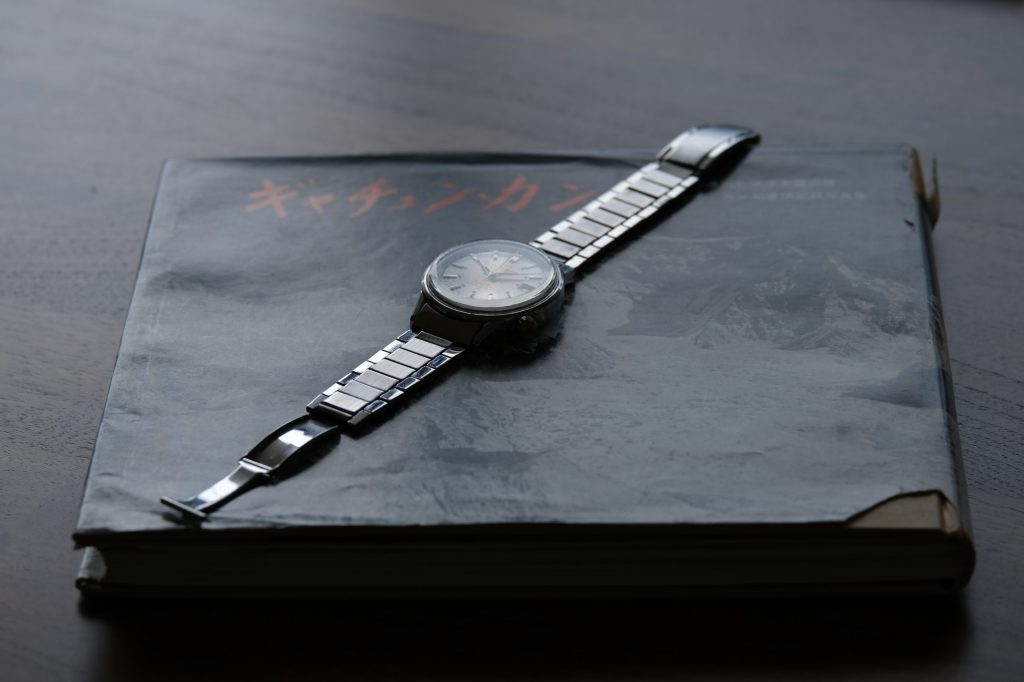
Seiko was a sponsor of the mission and provided specially built watches for the event. These were not commercially sold and appear to have been made as one-offs. The watches themselves were Seikomatic Self-dater Silverwaves, which are internal bezel dive watches with an automatic movement and date. Seiko upgraded the movement for improved oil retention in extreme cold. The author, Chris Dahlman, purchased one of these watches, which have a special inscription in Japanese on the back commemorating the 1964 Gyachung expedition.
Dahlman conducted extensive primary research about the expedition, including interviewing the surviving participants and gathering documentation such as the many photographs that grace the pages. He initially discusses the background of Japanese mountain climbing clubs, including their history, financial concerns, and structure. He then goes into detail about the planning of the mission. The bulk of the book, however, is comprised of a chronological description of the expedition.
The description of the expedition is formatted as a journal, with dates followed by a few notes and an attribution. It seems like it comes from journals kept during the mission, perhaps with additional information from the interviews Dhalman conducted. The drama and difficulty of the expedition is emphasized, along with tragedy and the eventual cathartic triumph of summiting the peak.
The author buries the lede a bit. The book was inspired by his purchase of one of the Gyachung watches, but he mentions this only at the end of the book instead of the beginning. Although Seiko is alluded to in the introduction, the initial mountaineering discussion lacks context without the unifying element of his purchase of the watch. To be fair, he does give a very detailed description of Seiko’s role in sponsoring the mission and of the Gyachung watches themselves in the early part of the book, but it seems a bit jarring without the context. The book basically assumes that you know the backstory that the author has one of these Gyachung watches and that this was the reason he researched the topic and wrote the book.
Seiko’s history has become increasingly important. In the current environment where watches are more of a statement than an actual tool for telling the time, storytelling is critical to a watch’s marketplace success. While over the years Seiko has been strong in producing quality, affordable watches, the Apple watch has taken over the bulk of watches sold at their traditional price points. The brand has reacted by migrating upmarket, splitting off the Grand Seiko line and emphasizing premium sub-brands like Prospex and Presage. Although Seiko has had some success in creating a distinctive design language, the brand has not leaned into their history as much as tradition-minded Swiss brands. The tendency of Seiko to create so many SKUs for everyone at every price point has perhaps impeded their focus in terms of creating stories and emotion behind their watches.
Notably, a brand does not have to even have a particular history in order to create a story. Although Ian Fleming described James Bond as wearing a Rolex and early movies had him donning a Submariner and later a variety of Seikos, today brand sponsorship has made Bond watch synonymous with the Omega Seamaster. More recently, Panerai’s Mike Horn Edition watch came with an opportunity to go on your own adventure with the legendary explorer. Rolex themselves were perhaps the pioneers of this marketing-driven approach by sending Edmund Hillary with an Oyster Perpetual that perhaps was left behind in favor of a Smith’s watch when he summited with or without his sherpa Tenzing Norgay wearing a Rolex. This did not stop Rolex from marketing a watch dedicated to the worldwide publicity of the event, making the Rolex Explorer the ultimate adventurer’s watch in the minds of millions.
The Seiko Alpinist in its various incarnations has been positioned as Seiko’s mountaineering and field watch. However, without a great story, it has not yet been able to compete with the Explorer on the basis of emotion. Although Dahlman does not speculate on whether the Gyachung watch influenced the Alpinist, there is at a minimum the common feature of an internal rotating bezel that can be used as a compass. I hope that the rediscovery of an important part of their heritage inspires Seiko to look back for other forgotten stories.
 The Lost Spring Bar