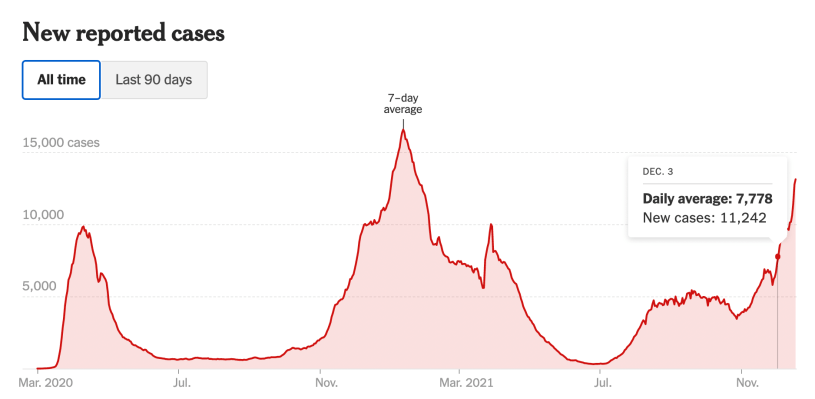
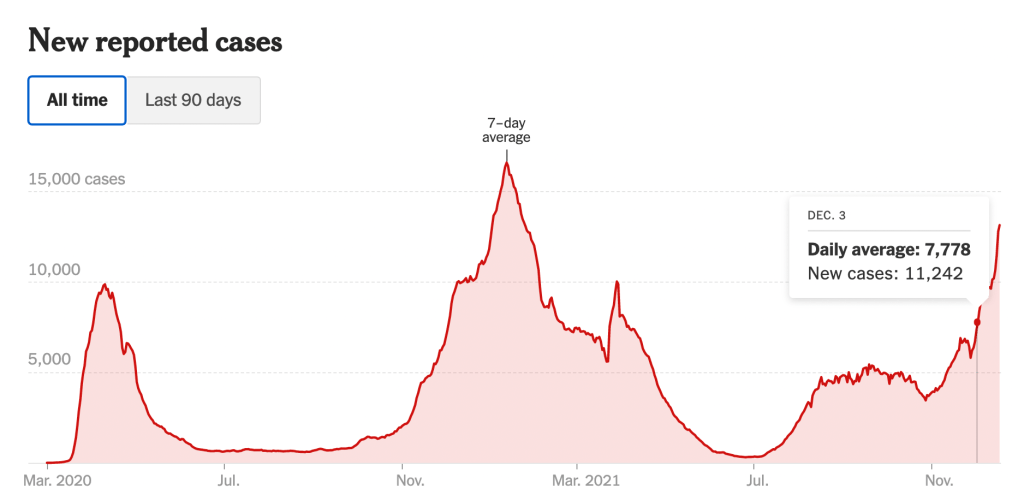
In the past week there has been a change in the atmosphere in Westchester, NY as COVID-19 cases have soared. My mechanic was wearing a mask outdoors when I picked up my car yesterday. The diner was empty except for one table of customers blithely eating indoors while ten pickup orders lined the counter. My surgical office appointments are not double booked for the first time in months. Our synagogue cancelled family night and put religious school on hold while its leaders evaluate the situation. New Yorkers seem to have gotten the message to mask up and hunker down as the Omicron wave heads towards us like an asteroid bent on planetary destruction.

Meanwhile, there is a sadness mixed with grim determination in the air. Just when the memories of our first wave in the of Spring 2020 finally seemed to be receding, the news of hospitals being overwhelmed and broadway shows going dark because of breakthrough infections among the cast is difficult to accept. Our reopening was hard fought and a shutdown, although at this point existing more in our minds than in the law, is a bitter pill to swallow.
We the survivors remain at war, seemingly without end, against an implacable virus which grows more fearsome at every turn. Yet we face this foe better armed than at any other point in this pandemic. The first wave, having caught us unprepared, devastated and overwhelmed our health system. Our tools were blunt. Our government responded with stay at home orders, nonessential business shutdowns, and the stockpiling of ventilators. We had a president who amplified quack cures like hydroxychloroquine while he mused about ultraviolent light and bleach injections. Personal protective equipment was rationed as health care workers on the front lines lined up to receive a once a week N95 mask allotment. We have come far from those dark times.
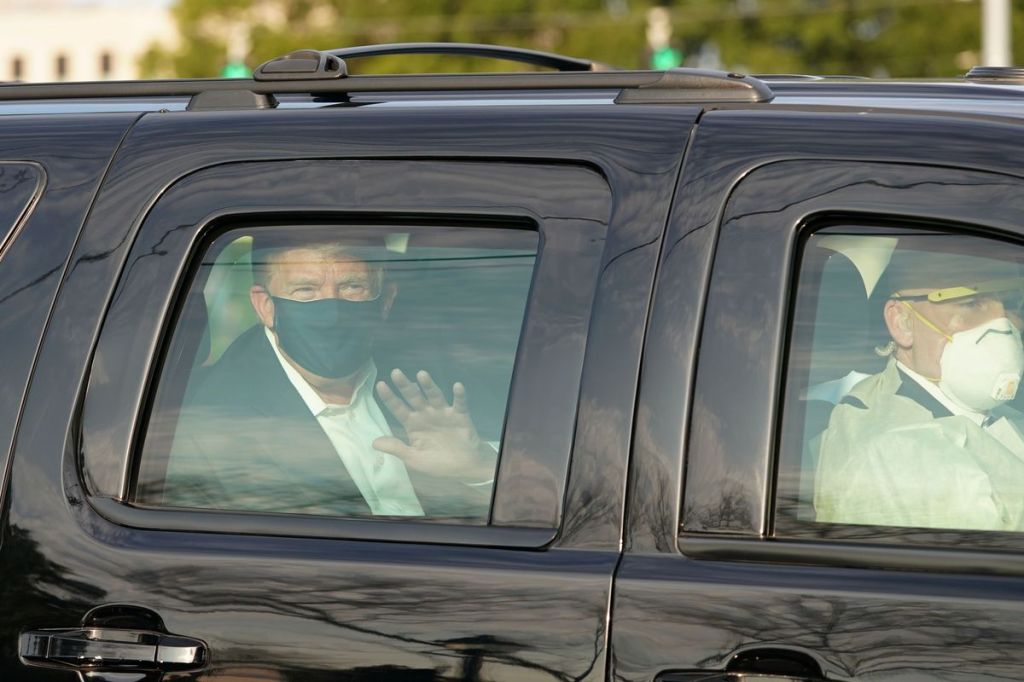
Critically, we have a weapon that can turn back the Omicron wave if only we have the will to use it. Three doses of an mRNA vaccine, namely Pfizer or Moderna, will stop Omicron dead in its tracks. It is truly madness not to be vaccinated at this point and it is folly not to have a booster shot. The original SARS-CoV-2 virus spread exponentially, and its contagiousness has been turbocharged by the mutations in the Omicron variant. The current estimate is that Omicron has an R value between 3 and 5, meaning that one host will infect 3 to 5 others, and those 3 to 5 others will infect another 3 to 5 others, and so on. Interrupting the spread by having the virus hit a wall build by vaccine immunity can potentially stop thousands of infections down the road.
Other effective and familiar measures, like wearing masks indoors, have made a comeback. In the first wave it was thought that the virus was spread primarily via droplets that sprayed out and fall to the ground. It was thought they they could linger in the environment, leading to “enhanced cleaning protocols” at work, a run on bleach for doorknobs and groceries, and prison labor being used to make hand sanitizer here in New York. It took more than a year for the World Health Organization to acknowledge that COVID-19 is airborne. I suppose it must have been hard to acknowledge it at first because protocols for an airborne illness where the particles float a far distance from the patient, are much more strict than for a droplet illness where the infectious material falls to the ground and can be contained at perhaps 6 feet from the patient. Airborne illnesses require negative pressure rooms (in short supply) in the hospital where the air is sucked into the room when the door opens to prevent the particles from floating out into the hallway. Ultimately this was crudely solved with cohorting, where certain hospital floors were designated for COVID-19 patients in order to contain the infection.
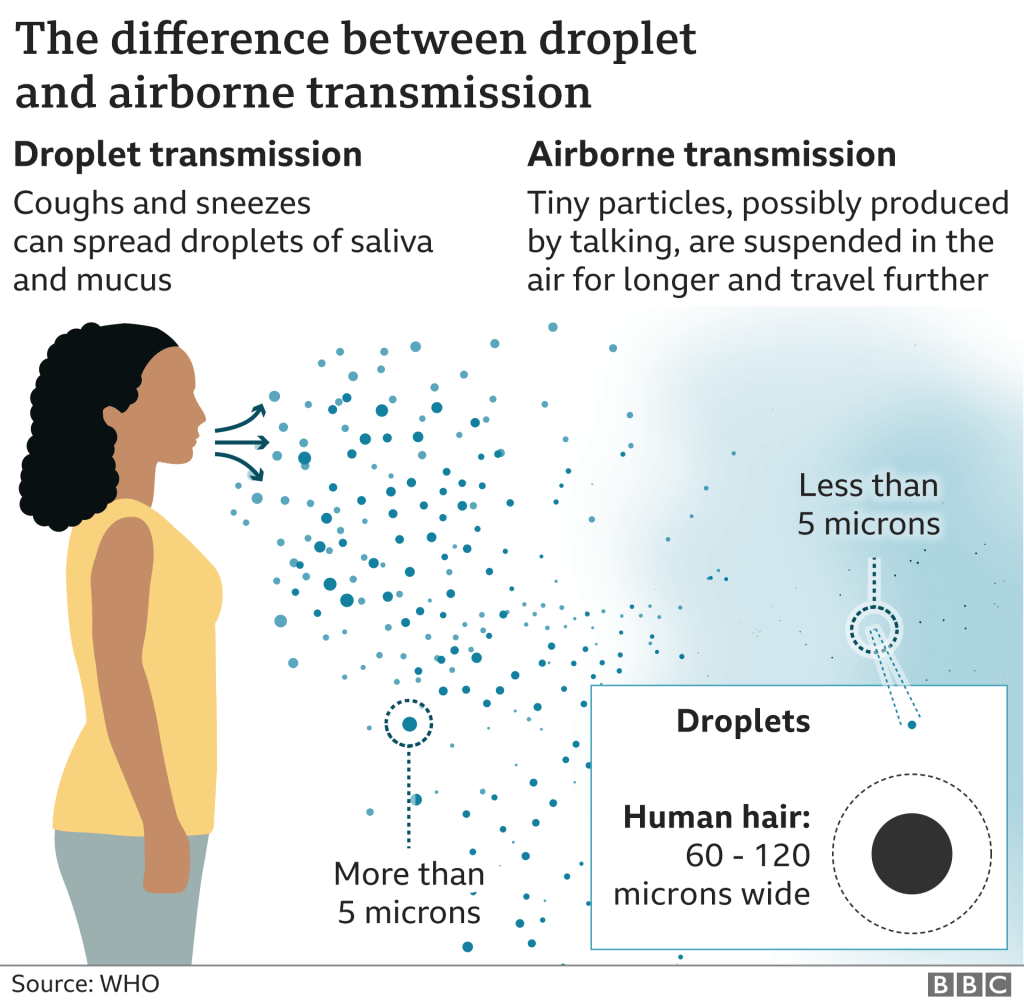
There are important implications to understand about the spread of an airborne virus like SARS-CoV-2. Basically, COVID-19 from an infected person will spread like smoke from a fire. The most smoke you inhale, the higher the chance you will catch it. If the fire is outside, you probably won’t inhale much at all (the risk of catching COVID-19 while outdoors is much less than indoors). If there is a cover over the fire (a mask over the mouth and nose of the infected person, who may not know they they are infected), it will prevent the smoke from diffusing throughout the room. If the fire is put out quickly or people exit the room (the exposure to the infected person is short), less smoke will be inhaled. If the room is large and well ventilated, the smoke will not accumulate as much. Not being around a fire (living in an area with high immunity due to booster shots and responsible personal behavior) is of course the best way to avoid breathing in smoke. A mask that filters out most of the particles (a high filtration mask such as an N95 or KN95) is the most effective personal protective piece of equipment. When a high filtration mask when indoors is combined with a booster shot, the risk is greatly reduced which provides the best chance of avoiding COVID-19 this winter.
 The Lost Spring Bar