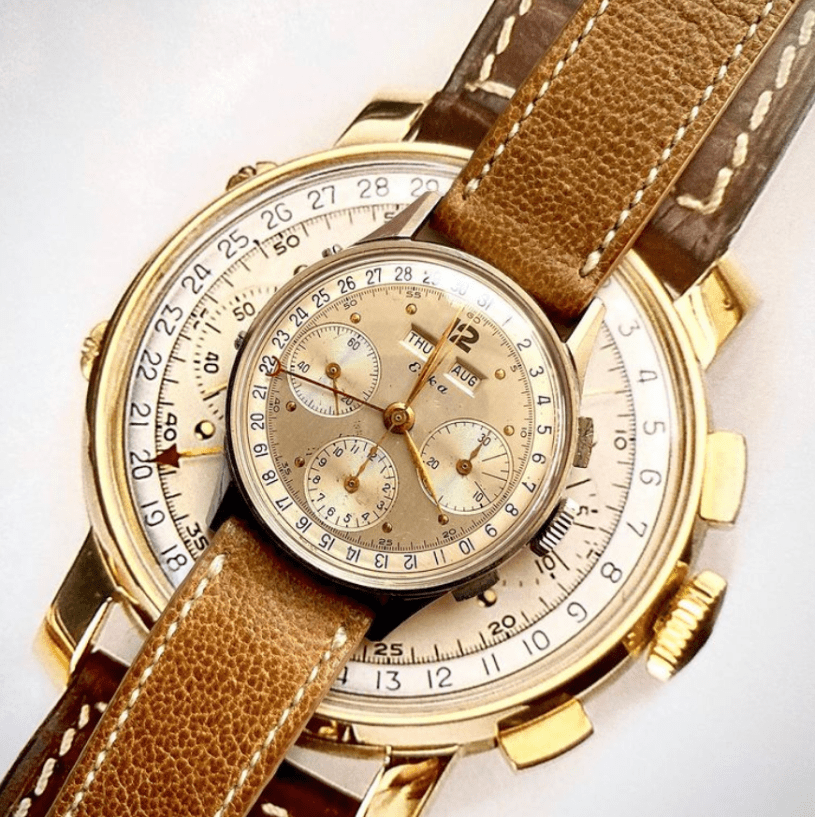
A lot of collectors like to complain about date windows. The most common complaints seem to be that the font or color doesn’t match the rest of the dial, or that the date is too big or too small, or that there shouldn’t be a date in the first place. Some collectors’ preference for no date makes little sense as the date is the most useful watch complication out there (as a doctor, I have to sign and date documents all the time). However, when you have a bunch of watches and don’t wear them all regularly, it is a bit of a pain to set both the time and the date. This is especially annoying on vintage watches without a quickset date. It’s even worse when the watch is perhaps past due for a potentially expensive and definitely time-consuming service and you have to grind out the turning of the hands until you get to today’s date so your Instagram pals won’t make fun of you when you post a wrist shot.
Placing dates on chronographs is especially tricky. Maybe Rolex with the Daytona and Omega with the Speedmaster Professional have the right idea of ditching it entirely (n.b. I am NOT going to get into all the variations of the Speedmaster which have dates, sorry). Considering all the subdials, perhaps it’s better to not have a date after all. However, this doesn’t stop brands from trying. Here’s a list of some of the oddball date placements in vintage chronographs in clockwise order.
Heuer Dato Version 1: Pull It Off the Shelf and Put It at 12

Ok so Heuer here is like, screw it, let’s just put the date at 12. None other than Jeff Stein pointed out that the seconds totalizer hand therefore obstructs the date view pretty much all the time unless the chronograph is active. It is powered by a Landeron 189 and was only made for about 2 years, probably because no one knew what day it was. I do like that it has a 45 minute counter instead of the usual 30.
Omega 1040: Date at 3 Is Good Enough for Me
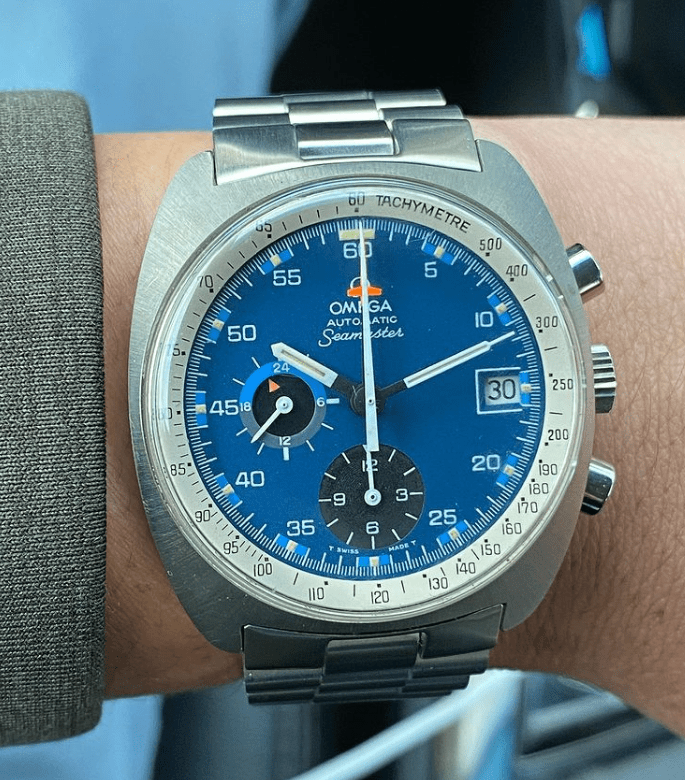
This is one of my personal watches. I think you have to love Lemania/Omega for just going for it here. Everyone else has a 2 or 3 register chronograph but they decided to stick the minute totalizer as a center hand and add wings to it and make it orange, put the hour totalizer subdial at 12, stick a double subdial with a running seconds and day/night indicator at 9, and with all that business everywhere else on the dial, put in a normal looking date at 3. The date is kind of over in the corner by itself, aloof but lonely, itself a bit of a lost spring bar. The later Lemania 5100 doubled down by adding a day and date at 3. The later versions of the Valjoux/ETA 775x based chronographs also went with 3 so this is a popular position.
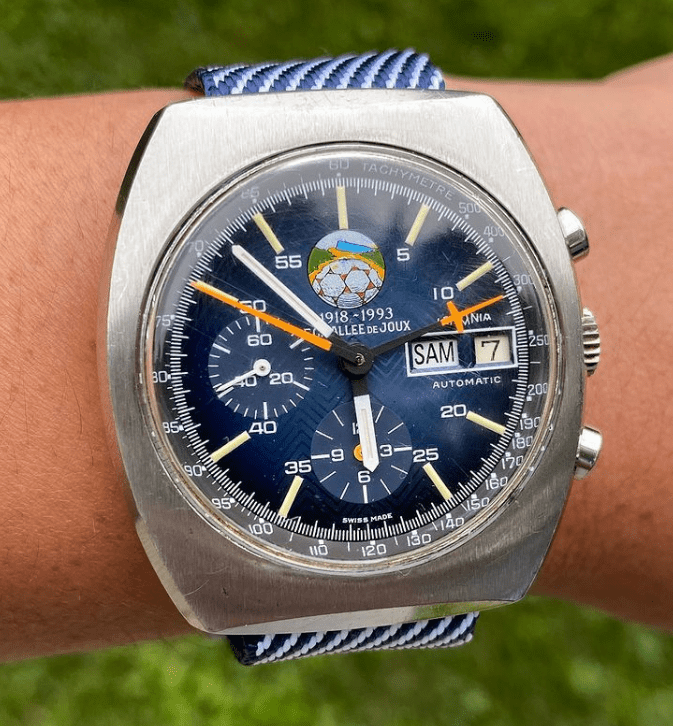
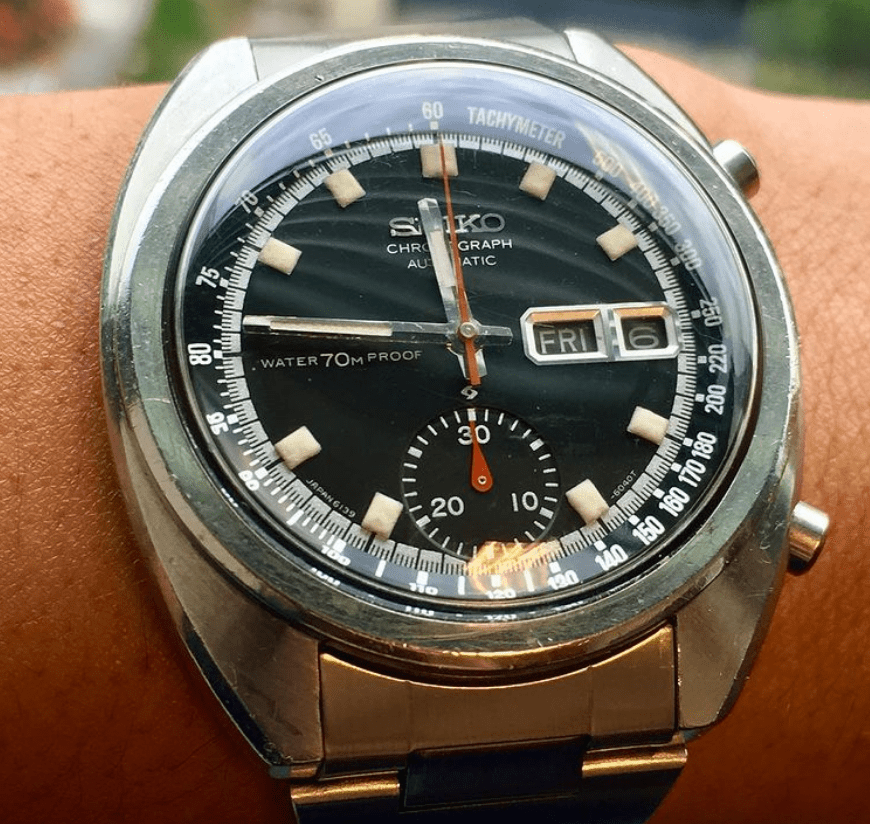
Seiko also went with 3 for the 6139 chronograph, putting the minute counter subdial at 6 and doing away with the running seconds hand. I personally like to complain about the 6139 movement while it is a vertical clutch pioneer and has a quickset day date (push in the crown lightly for the date, deeper for the day), it has no hand winding and no running seconds to tell if it’s working. I find the combination a bit annoying because I’m not sure if it’s running when I pick it up and I can’t wind it to make sure it has some power.
Of course Rolex made the date at 3 a standard feature and even stuck a big ol’ cyclops magnifier on it to emphasize the asymmetry. From a purely functional point of view, the date is the most used feature other than the time, and having it at 3 allows it to peek out from from under a sleeve.
Zenith El Primero: The Early Birdie Takes 4:30
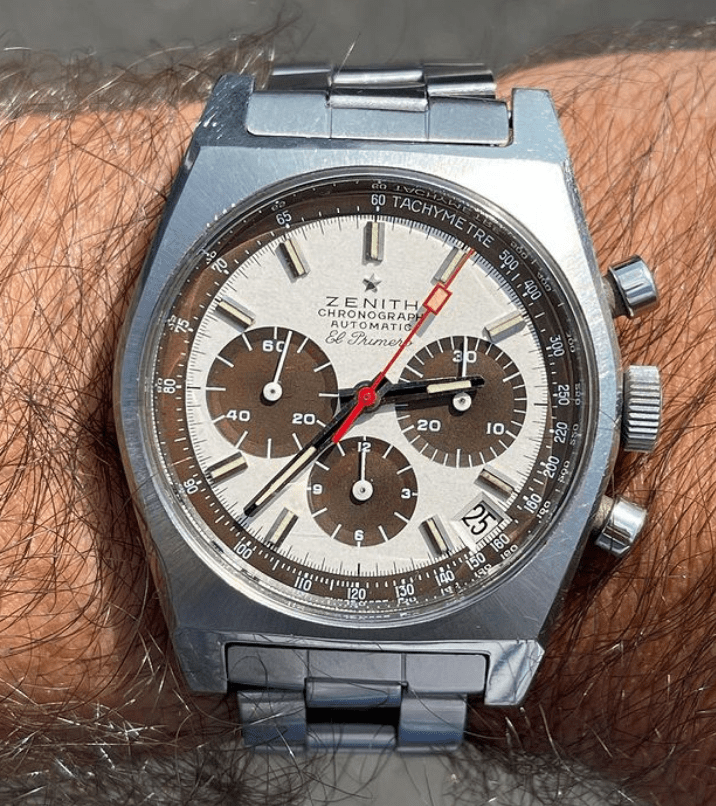
The dreaded 4:30 date! Here’s the problem with the date in a chronograph with subdials at 3, 6, and 9. I suppose the natural thing to do is to put it at 12, but as we noted with the Heuer Dato version 1, the date is obstructed by the seconds totalizer hand. So the options are to stick it on the side somewhere, either 4:30, or 7:37 and 30 seconds, or somewhere between 10 and 2. 4:30 just seems somehow arbitrary but I guess if you are making a first automatic chronograph you want all the bells and whistles, including the date. Notably, Rolex ditched the date when they used it in the so-called “Zenith Daytona.” Zenith usually make the window slightly trapezoidal and sets the date to follow the edge of the track rather than straight up and down which I think helps a little bit.
Breitling Chrono-matic: Date at 6, a Popular Trick
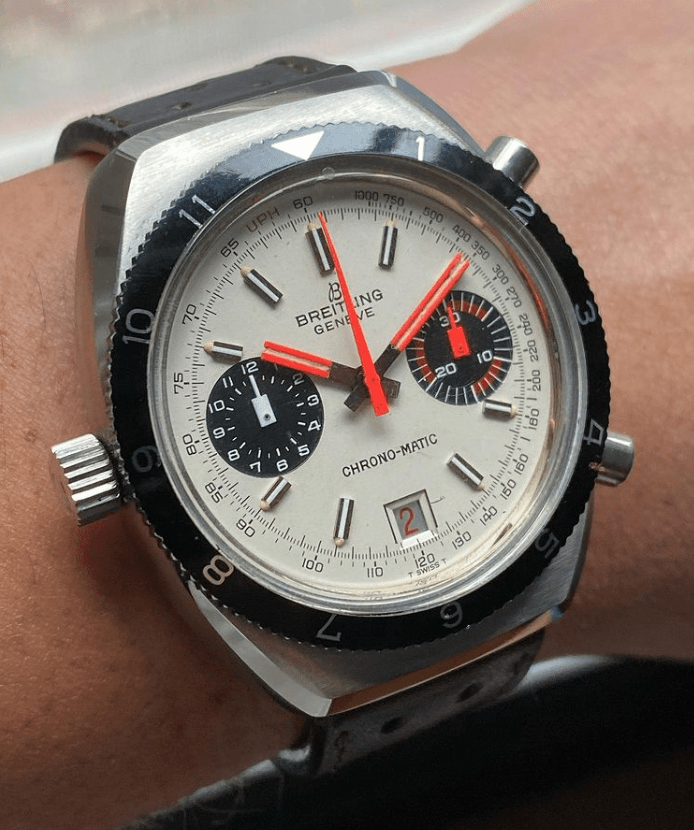
The Chrono-matic movement was the OG “collab” watch, except it was a collaboration for a purpose. Breitling/Heuer/Buren/Dubois Dupraz/Hamilton worked together to create their candidate for the first automatic chronograph. Like the El Primero and Seiko 6139, it also features a date. They chose to create a two register chronograph with minute and hour totalizer subdials at 3 and 9 but leave out a running seconds in exchange for a date at 6. I have the same issue with these movements as I do with the Seiko 6139 which is that you can’t tell if it’s running unless you active the seconds totalizer on the chronograph. At least you can hand wind this one and the date at 6 looks more natural for a two register chronograph.
A common caliber that also positioned the date at 6 was the Valjoux 7734. Valjoux acquired the patent for the Venus 188 when they absorbed the company and rebranded it as the Valjoux 7730. This gave rise to the variations in the 773x family and was the basic model used with computer design to create the Valjoux/ETA 7750.
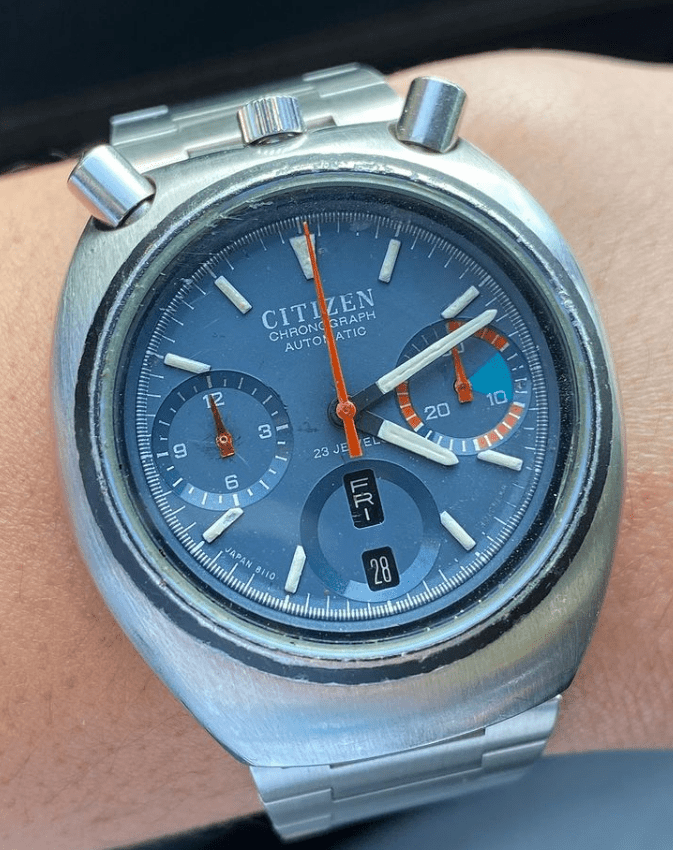
A weird and quirky one was the Citizen 8110, best known for use in the Challenge Timer in the “Bullhead” (pushers at top) configuration. This was Citizen’s automatic chronograph which had some unique and probably underappreciated features, specifically a flyback function and a quickset day date. The quickset date was done by pulling the crown out one position and rotating the crown while pushing the chronograph reset button with the crown out quickset the day. The day and date were stacked vertically at 6, which is quite unique. It does suffer from my pet peeve of no running seconds, but at least it has hand winding.
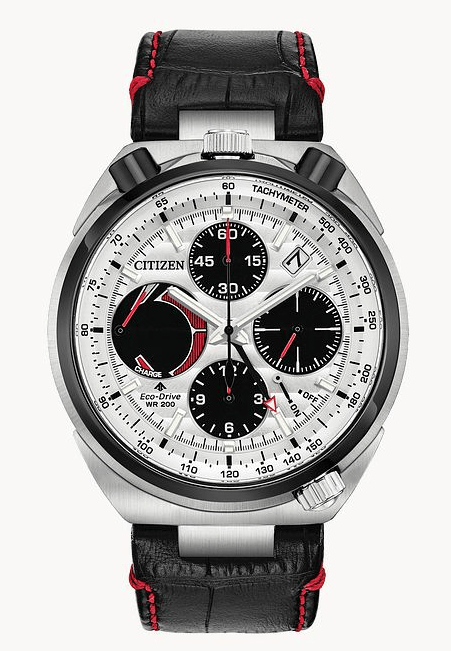
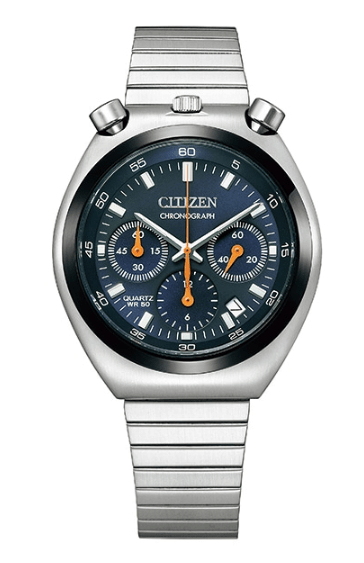
Brad Pitt wore a gold-plated Challenge Timer on a bund strap in the film Once Upon a Time in Hollywood so these have had a bit of a revival recently. In fact, Citizen recently reissued them in a quartz JDM model “Record Label Tsuno Chrono” that is closer to the original in size and design than the larger quartz “Promaster Tsuno Chrono Racer” bullhead that is part of their US lineup. Oddly, the Promaster version put the date at 1:30 due to an alarm on/off indicator at 4:30, while the most recent reissue has the date at 4:30.
Heuer Dato Version 2: Date at 9 is so Fine
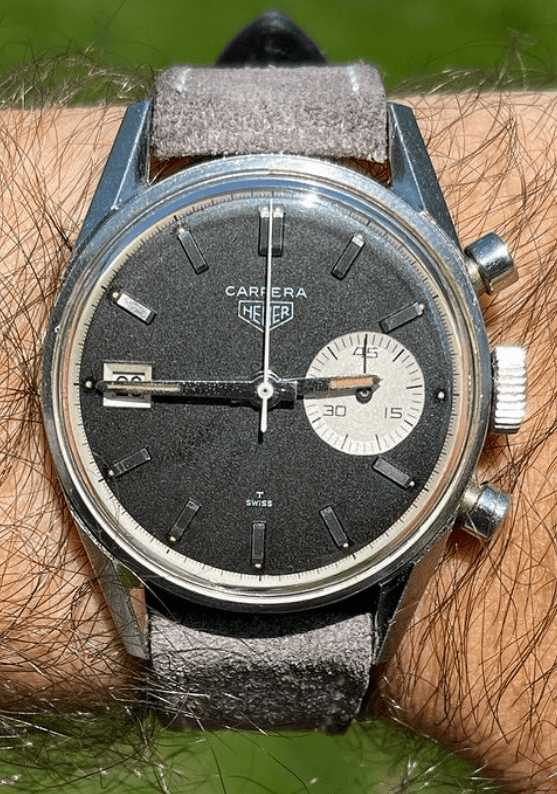
This appealingly asymmetric watch is also powered by a Landeron 189 and has a 45 minute totalizer subdial at 3 and the date over at 9. This looks slightly weird, probably because the Rolex Datejust has us all looking for the date at 3. But why not at 6? It’s just as arbitrary, except that if you pull your wrist out from under a sleeve it is the last thing you see instead of the first. Maybe Rolex was onto something. Anyway, the date at 9 is pretty unusual and this was cool enough to be reissued as a Hodinkee edition.
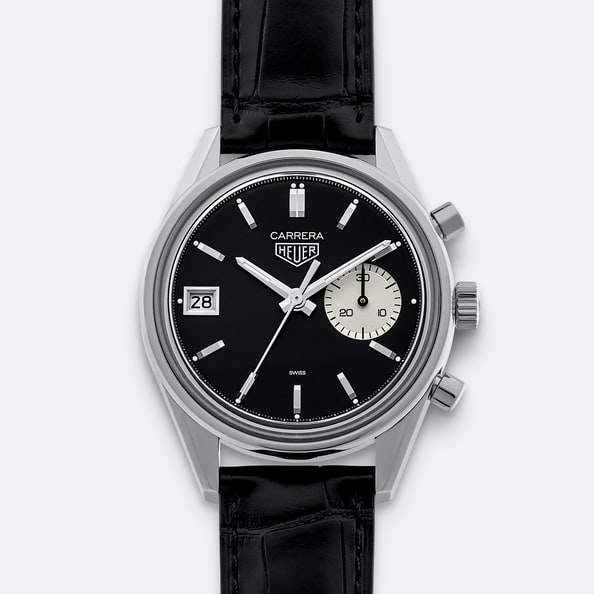
The reissue uses a modified “Heuer 02” caliber. I think it’s worth commenting on TAG Heuer’s weird contortions regarding their chronograph calibers. The much vaunted Caliber 1887 turned into a real black eye for the brand when it was found that the intellectual property had been purchased from Seiko and it was basically a reworked Seiko Caliber TC78. The 1887 was later renamed the “Heuer 01.” Another project called “1969” or “CH80” was renamed “Heuer 02.” Landeron and the Chrono-matic movements had no real progeny so the lineage of the Heuer 02 is fairly unclear. I suspect it has some architecture related to the 1887 and thus ultimately to Seiko, but I can’t find anyone who has analyzed this publicly. If anyone knows, please contact me on Instagram.
Valjoux 72c, Doing Well with the Day Date at 12
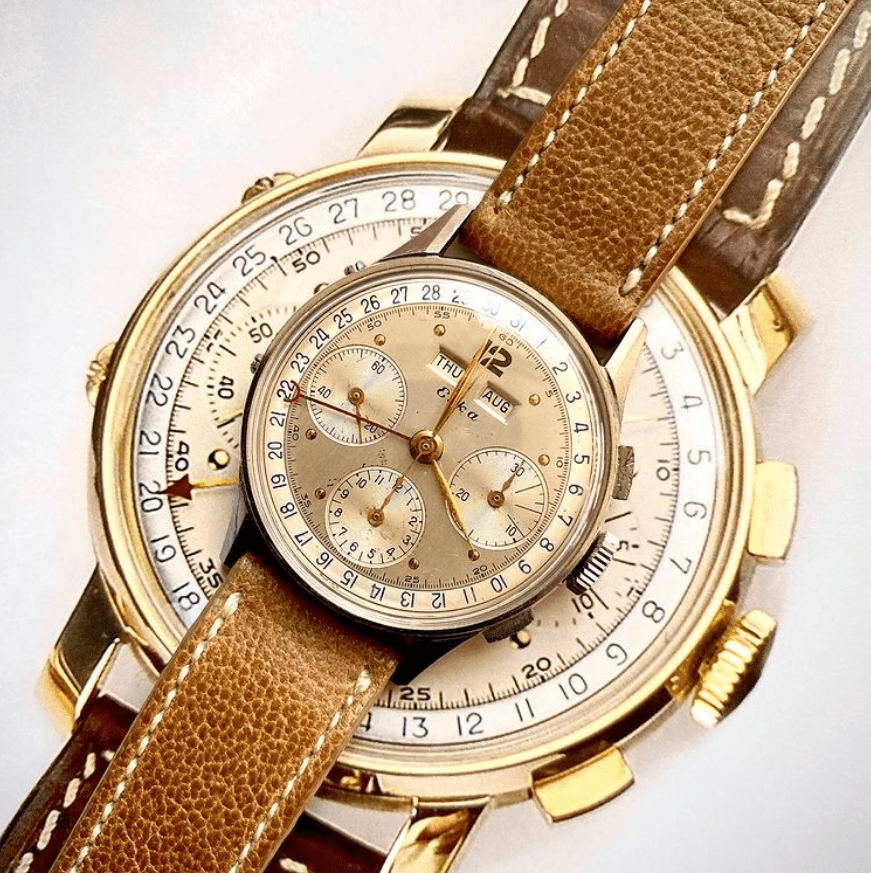
I really think the ideal dial configuration is a day date at 12 as in the classic Valjoux 72c. Of course, Rolex is the most famous brand to use this in the “Jean-Claude Killy” model, but there were plenty of other brands that used the same movement as in my watch depicted above. I think the combination of the day date and the brand logo and 12 o’clock marker create a more rounded area which blend in better with the chronograph functions. Having the day and date on either side of center allow the chronograph seconds totalizer hand to hang out at 12 without obstructing anything. The Universal Geneve Tri-compax has a similarly symmetric layout but I won’t discuss it here as it also has a moonphase complication.
 The Lost Spring Bar