Memories
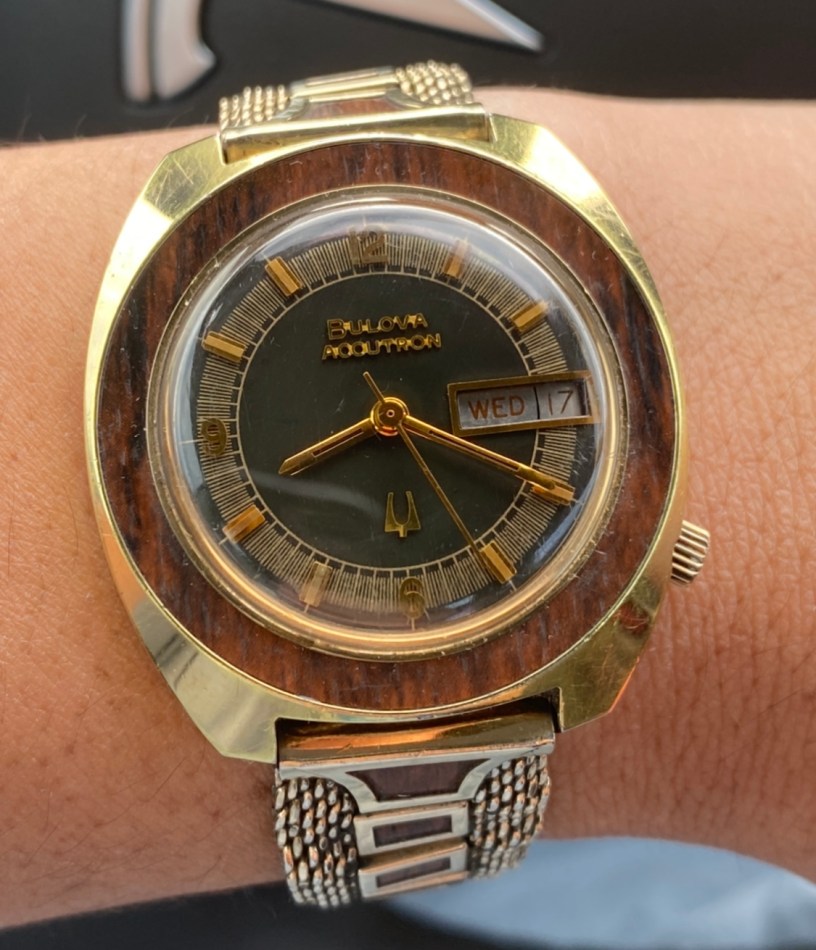
One of my earliest memories is riding in my dad’s wood paneled station wagon in the early 80’s. I must have been a toddler at the time but I remember napping in the open trunk with a blanket during long car trips and sitting in the front middle seat with a lap seatbelt. This type of travel nowadays seems horrendously unsafe but in the halcyon days of yore it was not a big deal. My safely car seated kids will never have those experiences, nor see amber colored ashtrays in McDonald’s.
The Bulova Accutron
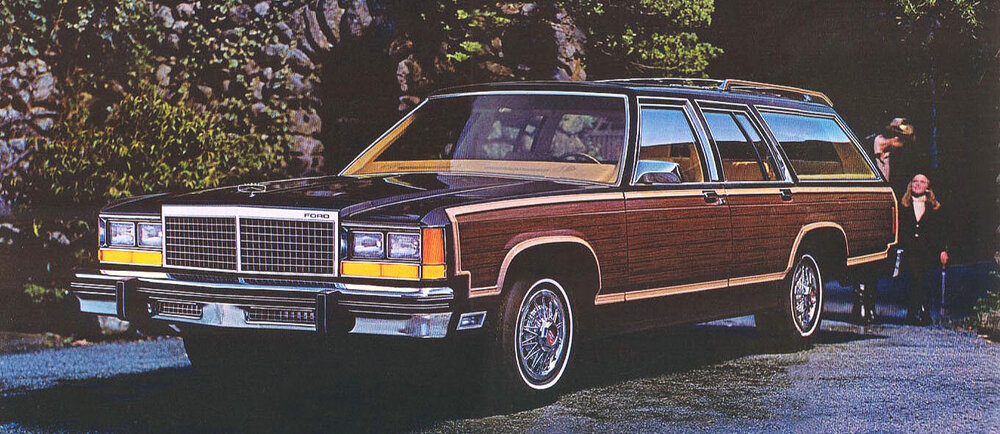
The Accutron was the best known of the Max Hetzel tuning fork movements. Produced from 1960 until the late 1970’s, tuning fork movements used a battery to drive vibrations in a tuning fork that drove a carefully constructed ratchet wheel with 300 teeth, each one 0.01 mm high. The 360 Hz oscillation speed made the tuning fork movement much more accurate than 2.5/4/5 Hz (18,000/28,800/36,000 vph) mechanical movements while providing a smooth “sweep” of the running seconds hand. The vibration produces an audible “hum” that is typical for tuning fork movements. The downsides of a relatively short battery life and a fragile ratchet wheel compared to commercially produced quartz movements ultimately rendered it obsolete.
By the Numbers
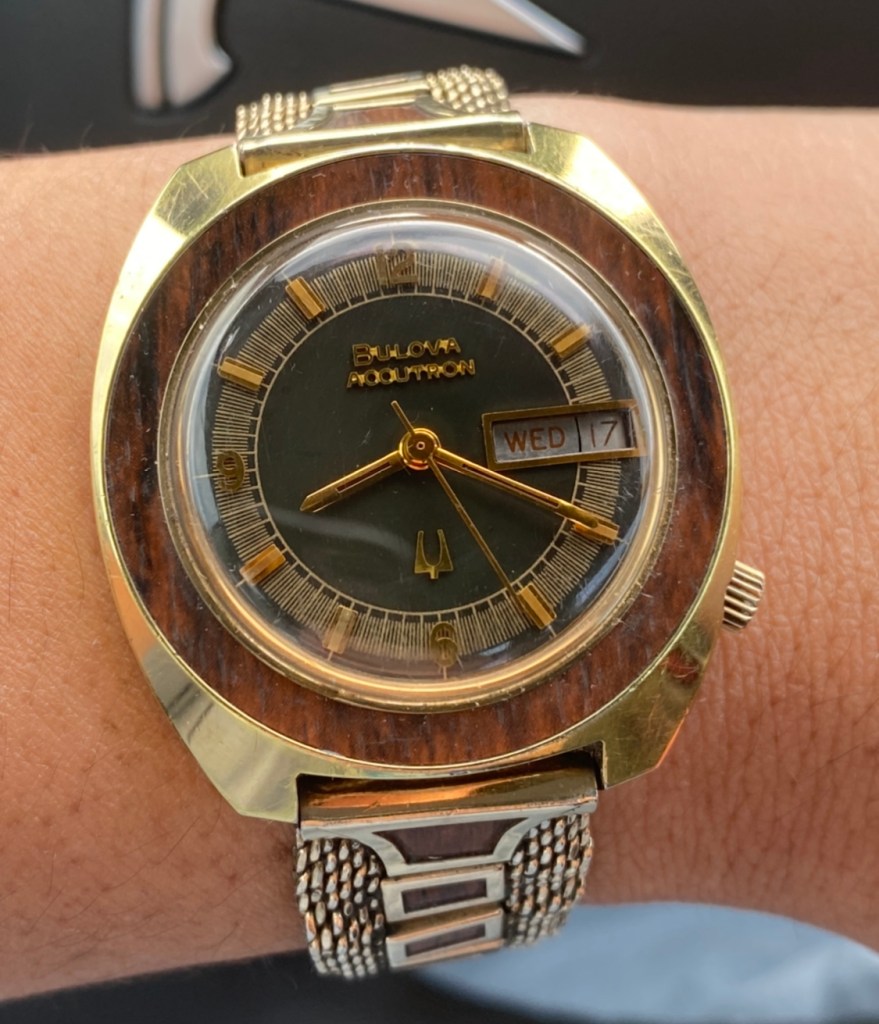
Diameter: 37.5 mm
Lug to lug: 40.6 mm without fixed portion of the bracelet, 42 mm with fixed ends of bracelet
Thickness: 10.8 mm including plexiglass dome
The Case
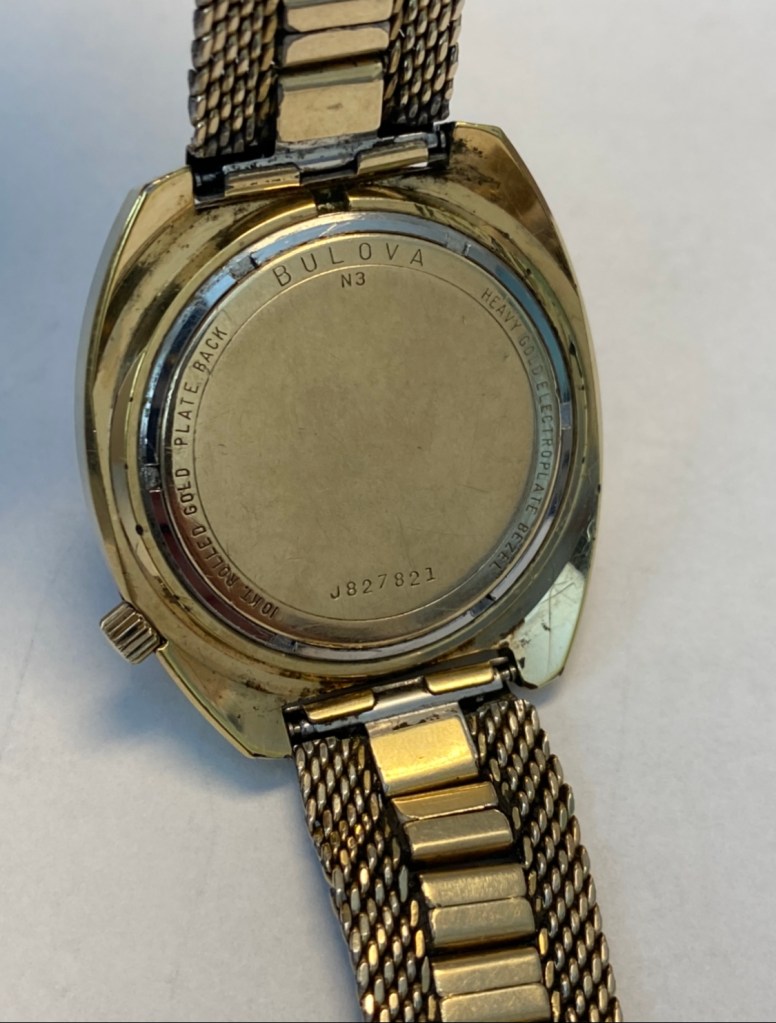
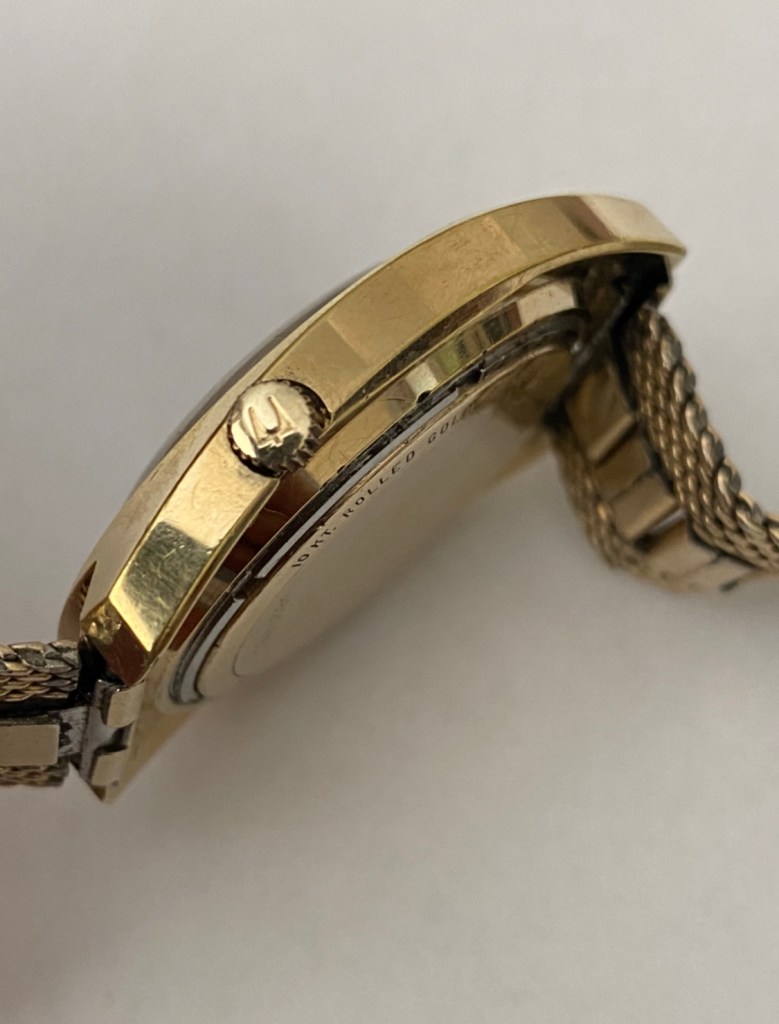
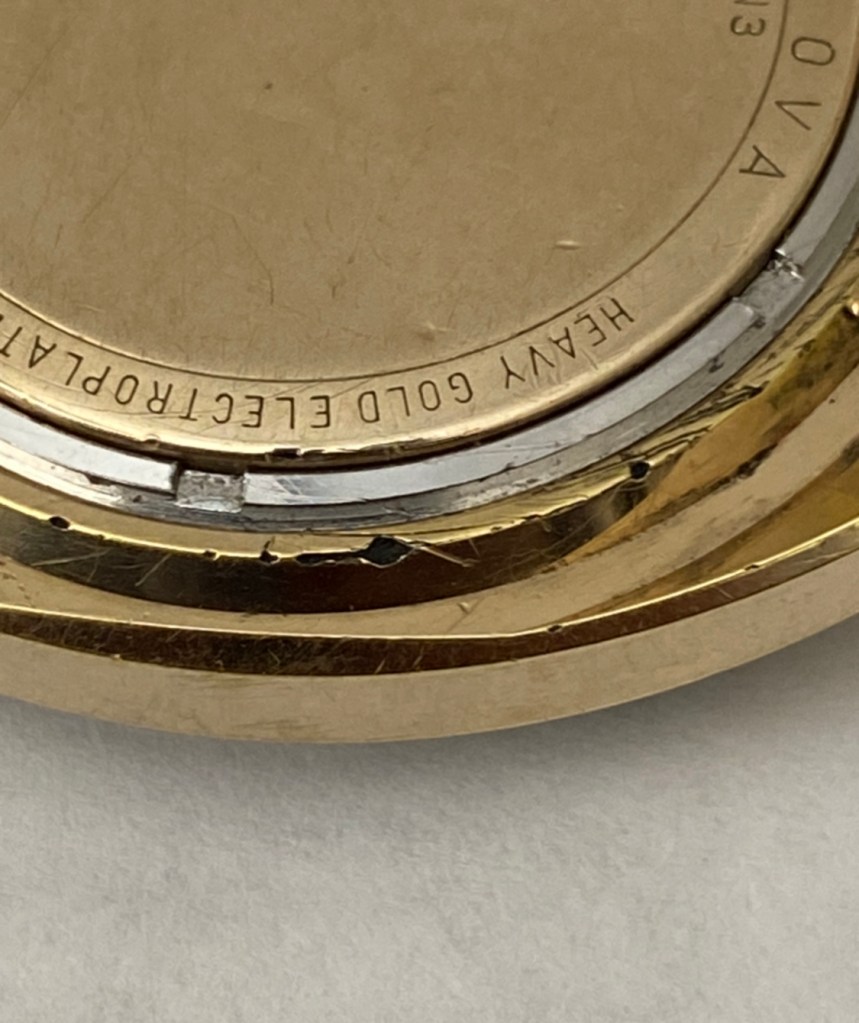
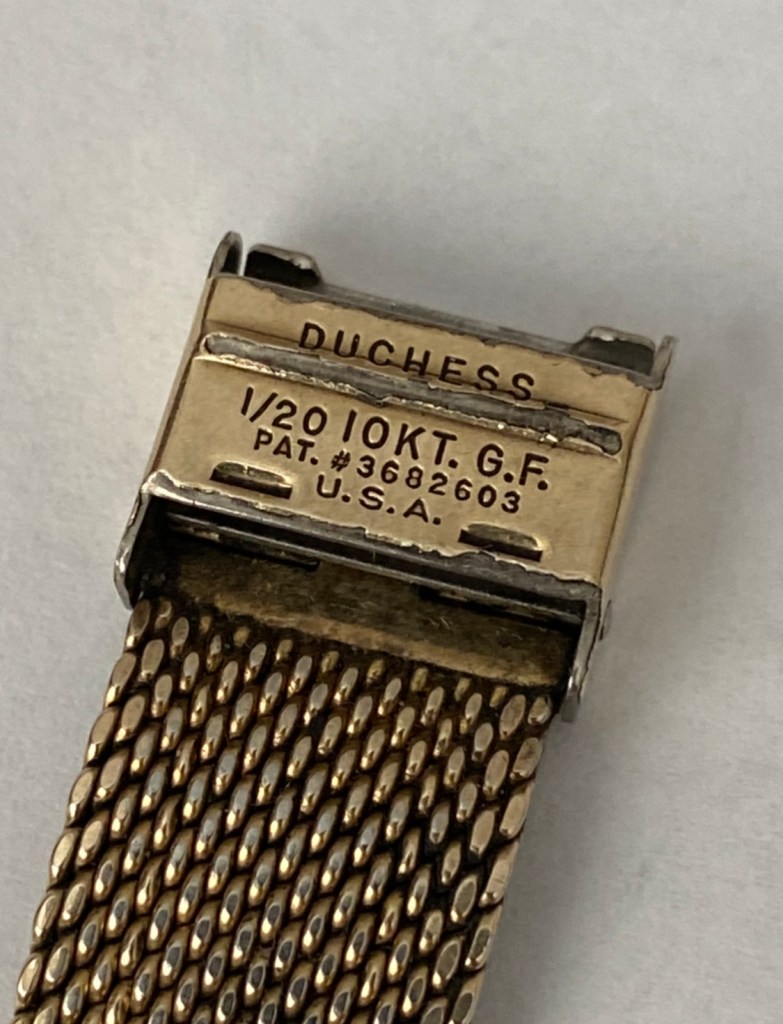
The Accutron Woody gets its name from the wood inlay in both the bezel and the bracelet. The wood grain is oriented vertically in both locations. The type of gold covering is marked on the back of the watch as “heavy gold electroplated bezel” and “10 kt. rolled gold plated back.” So in other words, the front of the watch is gold plated. Rolled gold usually refers to gold filled watches, where a layer of gold is applied over a base metal. It is much thicker and more durable than gold plating, and nowadays is sometimes referred to as “gold shell” which is a more accurate description. The back of my watch has some cracks where the gold has worn off, which suggests that it was a fairly thin layer but applied rather than electroplated. The bracelet is marked “1/20 10K G.F.” indicating a conventional gold fill. The back is held on by a chapter ring in steel. There is a tuning fork logo marked crown at 4, which was a common position for certain Accutron movements. The watch is small in dimensions but wears a big larger due to the cushion shaped case.
The Dial and Bezel
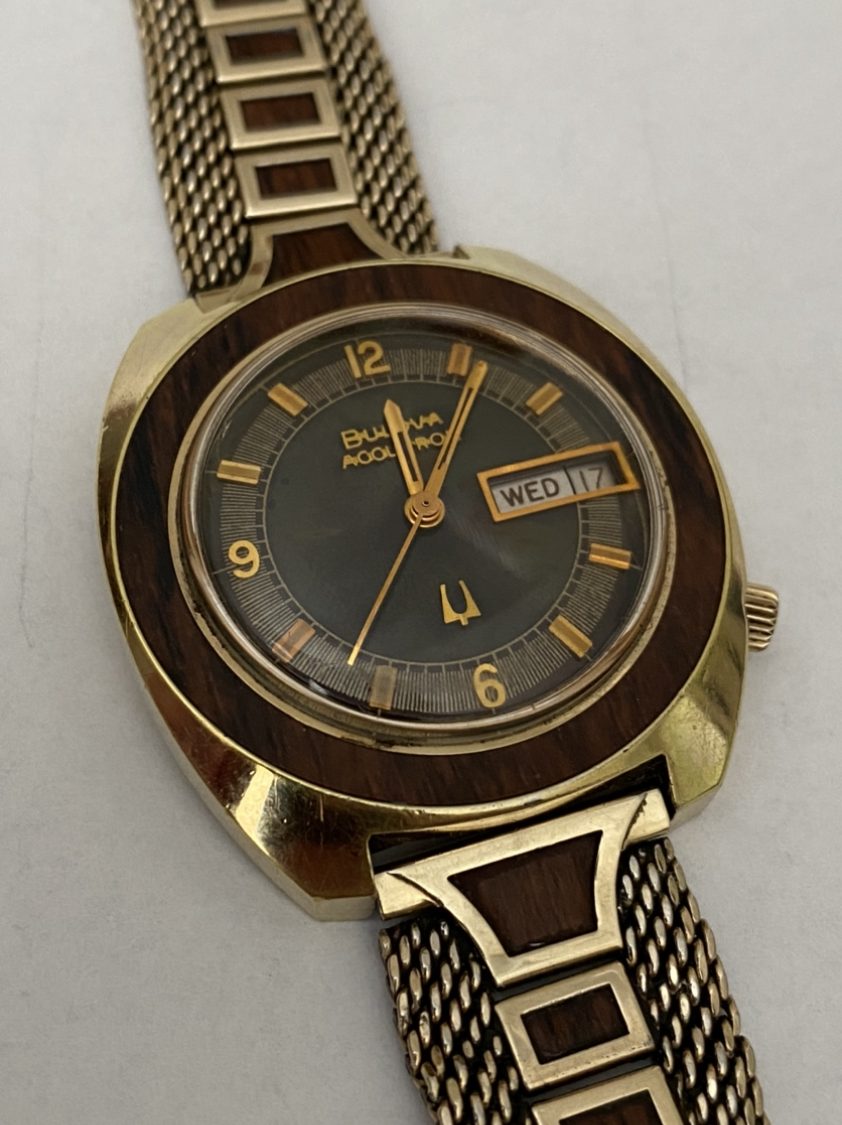
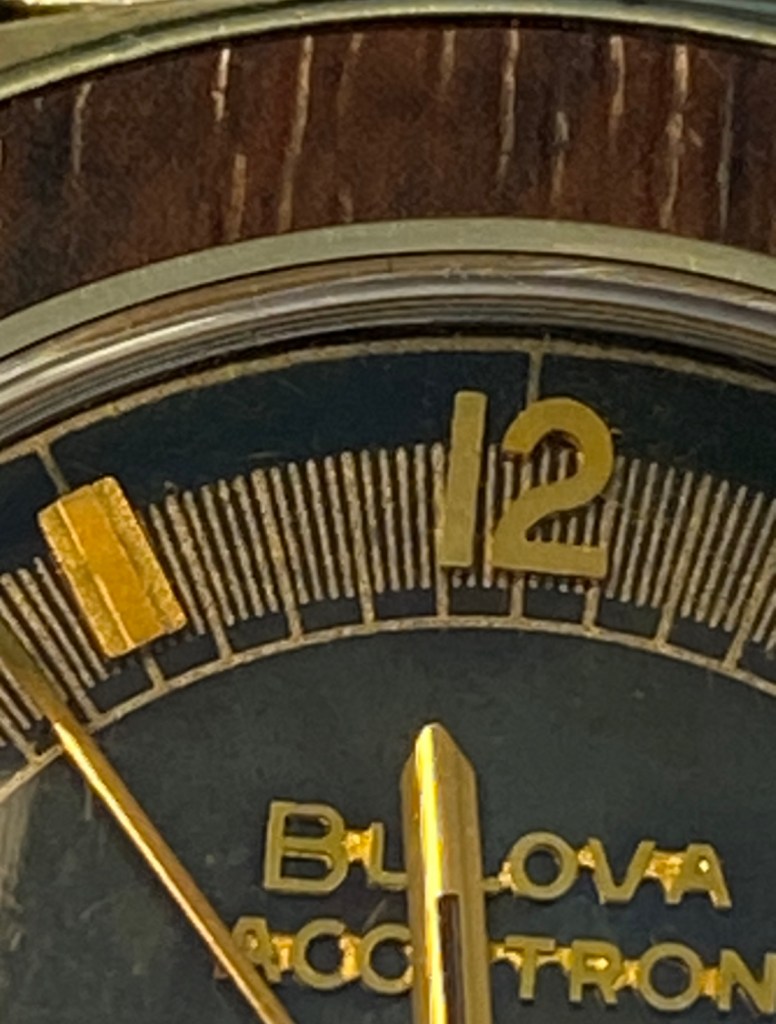
The wooden bezel is the star of the show in the front. It surrounds a plexiglass crystal. The dial is a dark brown with applied gold tone markers. Numbers are at 12, 6, and 9 while there is a day date at 3. The nonnumeric markers are in a 3 layer bar form with a dark brow strip in the center. There is also dark brown material at the tips of the hands. The material looks like aged tritium but it does not glow under a UV torch and appears not to be any type of luminous material. It is fauxtina before there was fauxtina. The Bulova Accutron logo is applied in one piece at 12 and there is an applied tuning fork logo at 6. In between the markers, there are printed one second hash marks with 1/5 second finer hash marks between them. The day and date at 3 are framed by an applied gold tone window.
The Bracelet
The bracelet is really interesting. As I mentioned earlier, it is gold filled. It is a finely woven Milanese mesh that has wood inlays that are mounted in gold tone rectangles rolled around the interlocked mesh, extending most of the way around the bracelet on both sides. There is a bell shaped wood inlay on both sides where the bracelet meets the case. It is a straight end bracelet and does not sit flush with the case, leaving a step off. One end of the bracelet is rounded and the other end has a clamp that allows for secure attachement and adjustment.

The Movement
The movement is an Accutron 2182, the later version of the original 214 movement incorporating some improvements in the hacking mechanism and calendar with day date. If you hold it to your ear you can hear the distinct humming noise. When buying a Woody you should check the movement, as some 2182s were replaced with a quartz movement during service when Accutron parts were not readily available. The function of the crown is counterintuitive in that the 1st position hacks the seconds hand and adjusts the time, while the 2nd position stops the battery. The day is nonquickset and the quickset date is adjusted by leaving the crown in position zero and somewhat forcefully turning it clockwise. I initially thought the quickset was broken until I looked up the function.
Conclusion
The Bulova Accutron Woody is a weird and wonderful watch. In a time when it seems like all of the watch brands are chasing the latest trends, this watch veers off in a completely different direction. I think as time goes on, what I am looking for as a collector is something that hits on nostalgia and distinctiveness. Like a wood paneled station wagon, the Woody hits a particular time and place that we will never see again. This is what makes it worthy of inclusion in my collection.
 The Lost Spring Bar